Israel seizes Beaufort Castle as ground offensive pushes deeper into Lebanon
Israeli forces have captured the historic Beaufort Castle in southern Lebanon, with Prime Minister Benjamin Netanyahu calling it a decisive shift in operations against Hezbollah as international condemnation mounts.
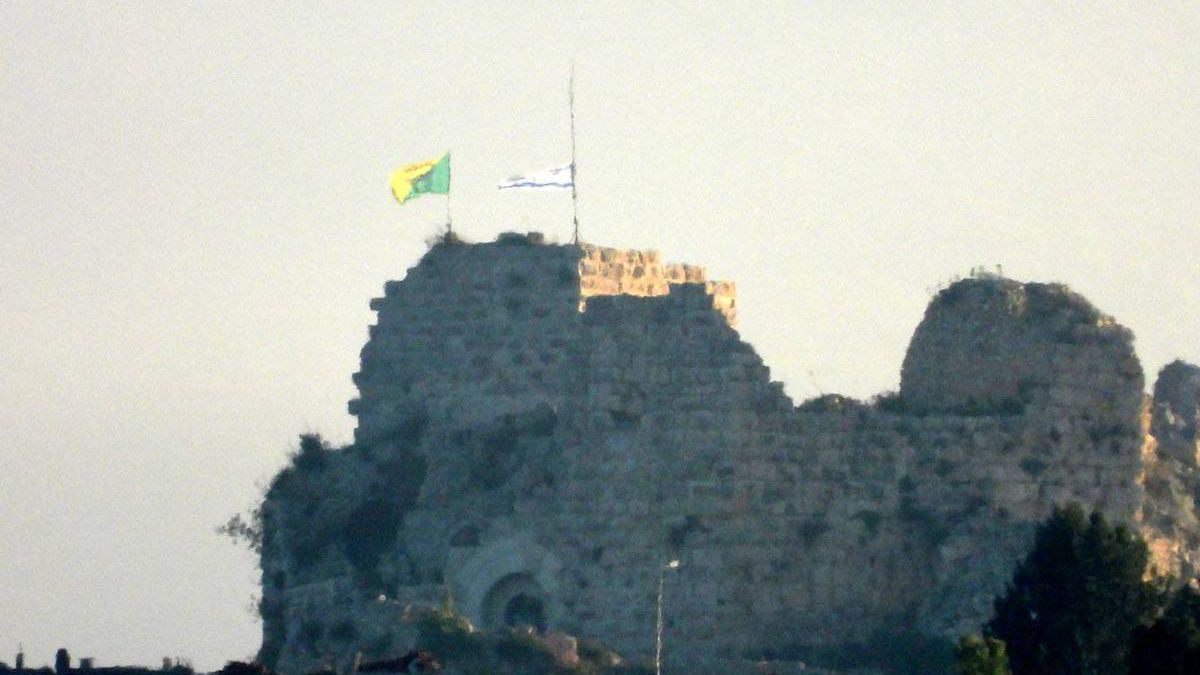
- Israeli forces capture Beaufort Castle, calling it a pivotal strategic and symbolic gain.
- Lebanon's prime minister condemns Israel's offensive as collective punishment and scorched-earth policy.
- UK, France and Germany urge ceasefire as Washington talks continue amid mounting casualties.

Israeli forces have captured Beaufort Castle, a medieval hilltop fortress in southern Lebanon, in a significant escalation of ground operations against the Iranian-backed Hezbollah armed group.
Israeli Defence Minister Israel Katz confirmed the capture in a social media post on Sunday, saying troops had returned to the site 44 years after the First Lebanon War and had raised the Israeli flag above it once more.
"Forty-four years after the heroic Battle of Beaufort, and on this day commemorating the soldiers who fell in the First Lebanon War, our troops have returned to the summit of Beaufort and once again raised the Israeli flag there," Katz wrote.
Prime Minister Benjamin Netanyahu described the operation as a turning point, saying in a statement that it represented "a decisive stage and decisive shift in our policy."
"We have broken the barrier of fear. We are taking the initiative, we are operating on all fronts — in Syria, in Gaza, in Lebanon," Netanyahu said.
Symbolic and strategic significance
Perched above the Litani valley, Beaufort Castle has commanded the surrounding region since it was built by Crusaders approximately 900 years ago. Israeli forces first seized the site in 1982 during the First Lebanon War and occupied it until 2000, when they withdrew from their self-declared buffer zone in southern Lebanon.
The castle sits approximately 14.5 kilometres from the Israeli border and offers sweeping views of northern Israel and southern Lebanon, making it a prized military vantage point.
Katz said control of the castle and its ridge was an important step in protecting Israeli communities on the other side of the border.
The Israeli military said a significant number of ground soldiers had commenced offensive operations aimed at expanding what it termed the Forward Defence Line, with operations currently spreading to additional areas north of the Litani River.
Evacuation orders extended northward
Alongside the ground push, the Israeli military issued sweeping evacuation orders covering areas south of the Zahrani River — roughly 40 kilometres from the Israeli border — warning residents that proximity to Hezbollah positions constituted a threat to life.
"Anyone present near Hezbollah elements, facilities, or combat means endangers their life. Any building used by Hezbollah for military purposes may become subject to targeting," military spokesman Avichay Adraee said.
It was the second such order in recent days instructing residents across southern Lebanon to leave the region.
Lebanon's Prime Minister Nawaf Salam condemned the offensive in a televised address, accusing Israel of pursuing a "scorched-earth policy and collective punishment" in the south of the country.
Salam said Israel was "destroying towns and villages, and forcing their inhabitants into exile," and called for an immediate halt to the fighting.
International condemnation
The escalation drew sharp criticism from European governments. UK Foreign Secretary Yvette Cooper wrote on social media that Israel's military escalation had "killed and displaced civilians, destroyed infrastructure, and eroded space for diplomacy," and called for it to end.
Cooper also called on Hezbollah to end attacks on Israel and disarm.
French President Emmanuel Macron said on social media that it was "urgent that the weapons fall silent — all of them, and for good," adding that "nothing justifies the major escalation currently under way in southern Lebanon."
French Foreign Minister Jean-Noël Barrot, speaking to French network BFMTV, described the situation as a "major mistake for Israel." France has also requested an emergency meeting of the United Nations Security Council to discuss Israeli military operations in Lebanon.
German Foreign Minister Johann Wadephul expressed "serious concern" over the army's advance, warning that further escalation would worsen displacement within Lebanon.
Ceasefire in name only
A truce between Israel and Hezbollah officially took effect on 17 April, but has not been observed by either side. Both parties accuse each other daily of violations and cite the other's alleged breaches to justify ongoing attacks.
On Saturday, Hezbollah said it launched multiple attacks targeting northern Israel and clashed with Israeli soldiers in southern Lebanon. The group said its fighters were engaged around the outskirts of Zawtar al-Sharqiyah, Yohmor al-Shaqif and Dibbine, and that Israeli forces had not yet succeeded in taking control of those towns.
The Israeli military said more than 25 projectiles were launched from Lebanon towards Israel on Saturday, with air alert sirens sounding in the northern cities of Karmiel and Safed — the first time since the ceasefire came into force.
The Israeli army confirmed on Sunday that one of its soldiers had been killed the previous day by a Hezbollah explosive drone, bringing the total number of Israeli military deaths in Lebanon since early March to 25.
Lebanon's health ministry reported that 13 hospital staff had been injured in an Israeli airstrike near Hiram hospital in Tyre, with the facility sustaining significant damage.
Lebanese authorities say that Israeli attacks have killed more than 3,371 people in the country since 2 March.
Washington talks continue
Military delegations from Israel and Lebanon held security talks in Washington on Friday, with a further round of US-brokered political negotiations scheduled for the coming week. A US statement after the Friday discussions described them as "productive military-to-military discussions" but made no reference to the truce.
Salam said the outcome of negotiations was "not guaranteed" but called them "the least costly path for our country and our people."
Hezbollah, which is not party to the talks, has vehemently opposed the direct negotiations between the two governments.
Lebanon was drawn into the broader conflict on 2 March, when Hezbollah launched rockets into Israel in retaliation for an Israeli strike that killed Iranian Supreme Leader Ali Khamenei. Israel responded with an air campaign across Lebanon and a ground invasion. The Lebanese government and army have remained largely bystanders in the confrontation between Israel and Hezbollah.