Singapore marriages fall to 24,688 in 2025, but newer unions prove more stable
Marriages fell 6.2 per cent to 24,688 in 2025, the third straight annual decline, according to the Ministry of Social and Family Development. Yet couples who wed from 2006 onwards are proving more resilient than earlier cohorts, new data show.
- Marriages fell 6.2 per cent to 24,688 in 2025, a third straight annual decline.
- Marriages formed since 2006 are dissolving less often than the 2005 cohort.
- Total fertility rate fell to a record low of 0.87 in 2025.

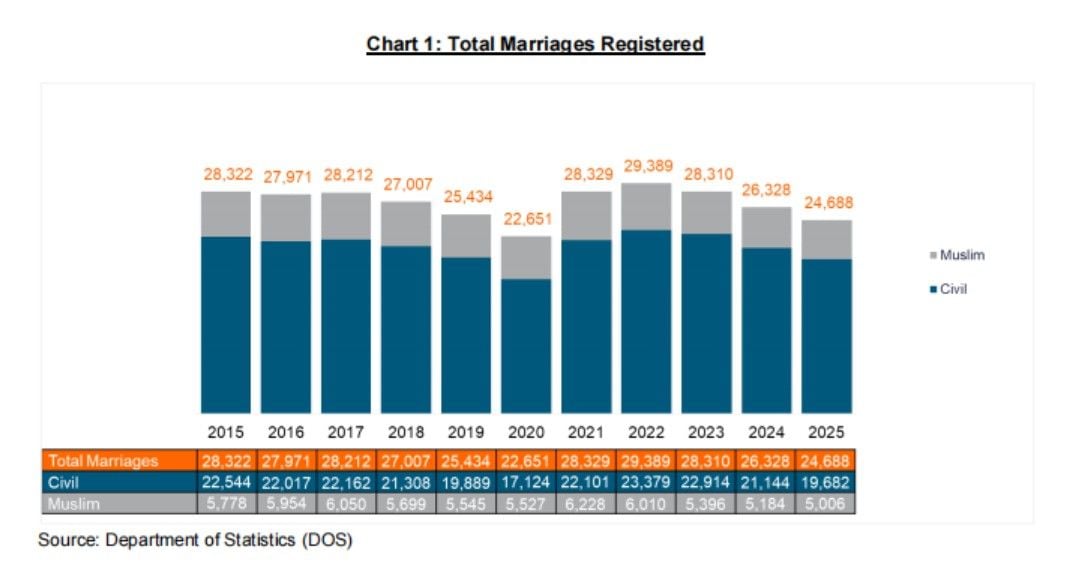
Singapore registered 24,688 marriages in 2025, down 6.2 per cent from 26,328 in 2024, according to the Family Trends Report 2026 released by the Ministry of Social and Family Development (MSF) on 10 July.
It was the third consecutive year that marriage numbers have declined, and the lowest total since 22,651 marriages were recorded in 2020, during the COVID-19 pandemic.
Marriage numbers fall for third straight year
The fall was driven by fewer civil and Muslim marriages among grooms and brides aged 25 to 34.
Civil marriages dropped 6.9 per cent to 19,682, while Muslim marriages fell 3.4 per cent to 5,006.
An MSF spokesperson said the trend reflects a broader shift towards later marriage seen across advanced societies, driven by changing social norms and personal priorities.
Despite fewer weddings overall, the report found that marriages have grown more stable over time.
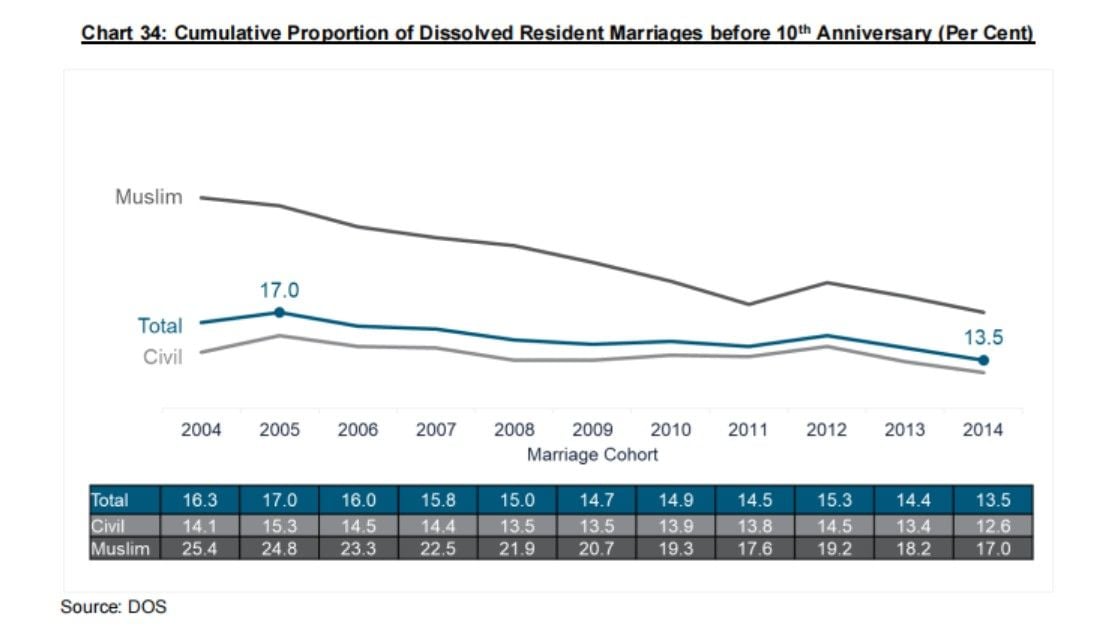
The cumulative proportion of resident marriages dissolving before the tenth anniversary fell from 17.0 per cent for the 2005 marriage cohort to 13.5 per cent for the 2014 cohort.
The most marked improvement was among Muslim marriages, where the gap with civil marriage dissolution rates has narrowed considerably, though it remains wider overall.
Early years remain the highest-risk period
Marriages remain most vulnerable between the fifth and tenth anniversaries.
Of the 2004 marriage cohort, 7.0 per cent had dissolved before the fifth anniversary, rising to 16.3 per cent by the tenth.
Subsequent five-year increases were smaller, reaching 24.7 per cent by the twentieth anniversary.
MSF said this points to the importance of supporting couples in their early years of marriage.
The report also surfaced findings largely absent from earlier mainstream coverage.
Remarriage and younger age linked to higher divorce rates
Remarriages proved consistently less stable than first marriages:
18.7 per cent of remarriages involving two previously married partners in the 2014 cohort had dissolved within ten years, against 12.3 per cent of first marriages, though the gap has been narrowing.
Marrying young carried the sharpest risk.
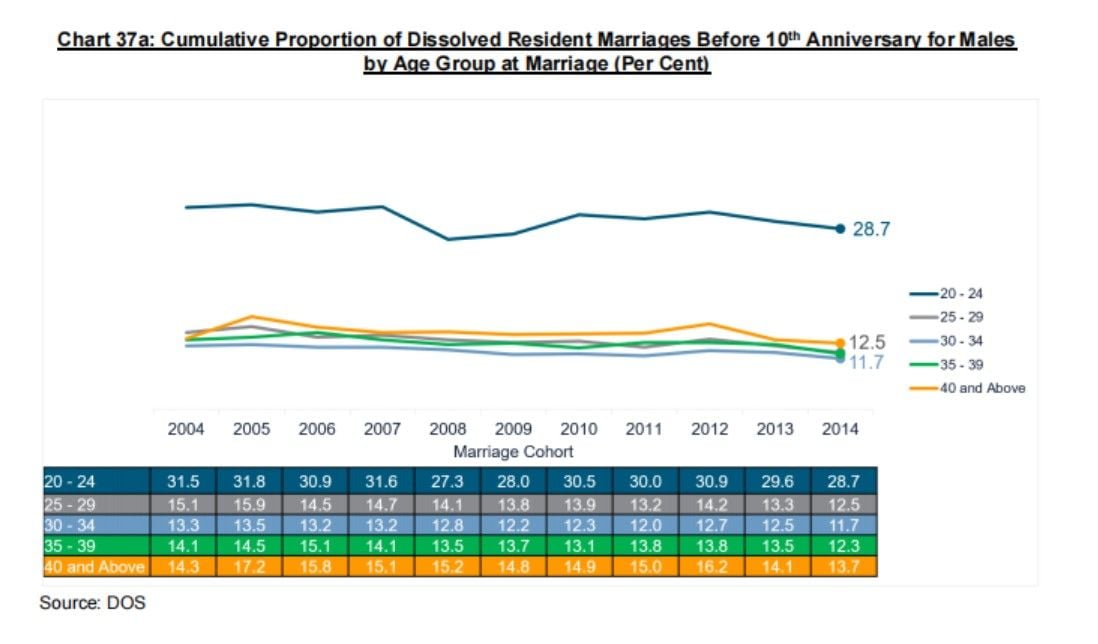
Among men who wed between ages 20 and 24, 28.7 per cent of the 2014 cohort had divorced within a decade, more than double the rate for men who married in their late twenties or thirties. A similar pattern held for women.
Changing profile of cross-border marriages
Profiles of foreign spouses marrying Singaporeans have shifted markedly over the past decade.
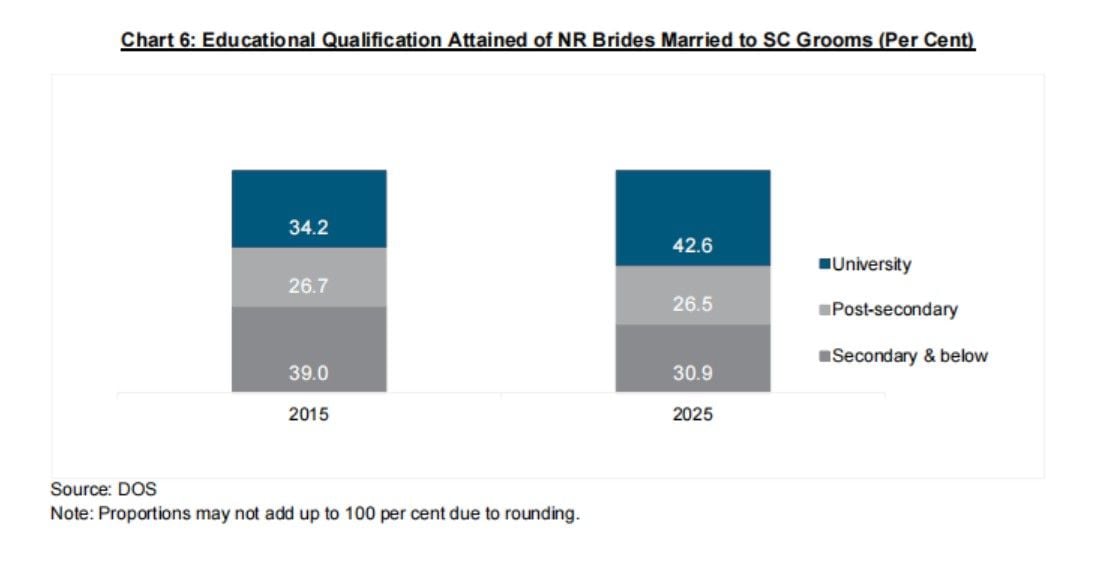
Non-resident brides marrying Singaporean grooms are now older and better educated: those under 25 fell from 18.4 per cent of such brides in 2015 to 9.1 per cent in 2025, while degree holders rose from 34.2 per cent to 42.6 per cent.
Non-resident grooms marrying Singaporean brides also aged, with those 35 and above rising from 35.7 per cent to 41.9 per cent; 54.6 per cent held university degrees.
Fewer residents are marrying as fertility reaches new low
The proportion of residents who have ever married has also declined.
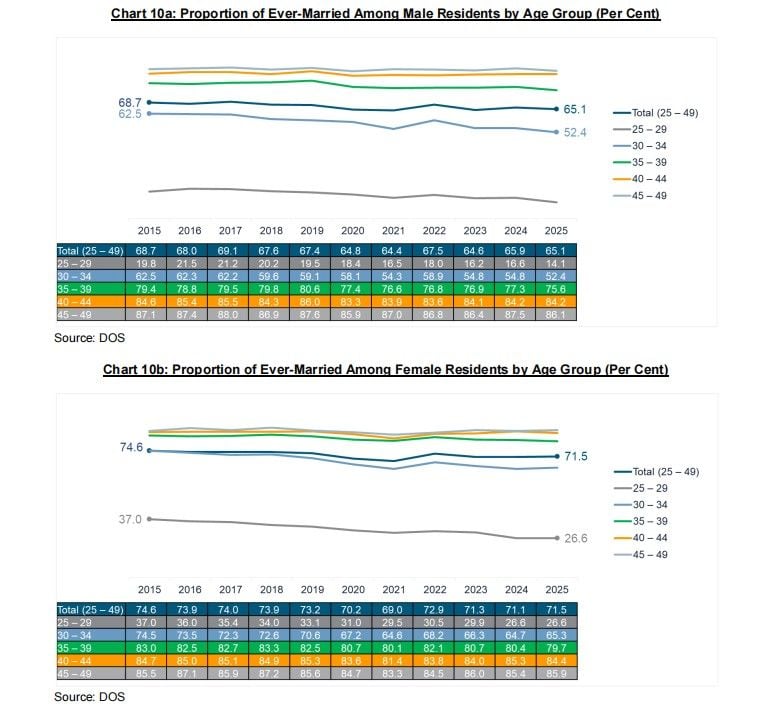
Among residents aged 25 to 49, the ever-married share fell from 68.7 per cent to 65.1 per cent for men and from 74.6 per cent to 71.5 per cent for women between 2015 and 2025, with the steepest drops among men aged 30 to 34 and women aged 25 to 29.
Singapore's resident total fertility rate slid to a historic low of 0.87 in 2025, its third straight year below 1, continuing a decline from 1.24 a decade earlier.
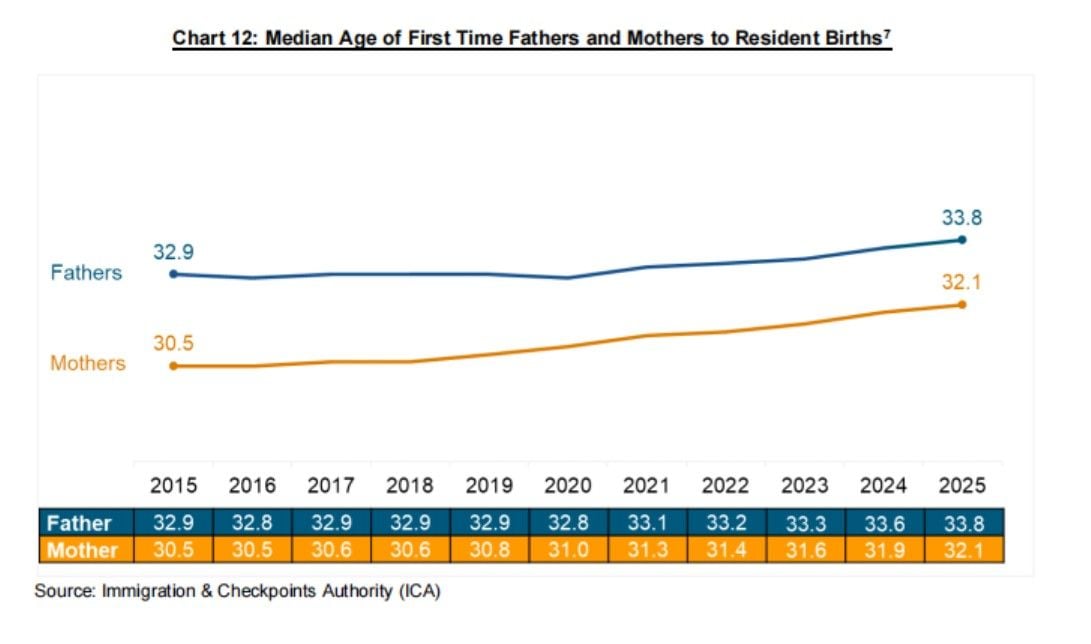
The median age of first-time fathers rose to 33.8 years and first-time mothers to 32.1 years, up from 32.9 and 30.5 respectively in 2015.
Greater support for parents and working families
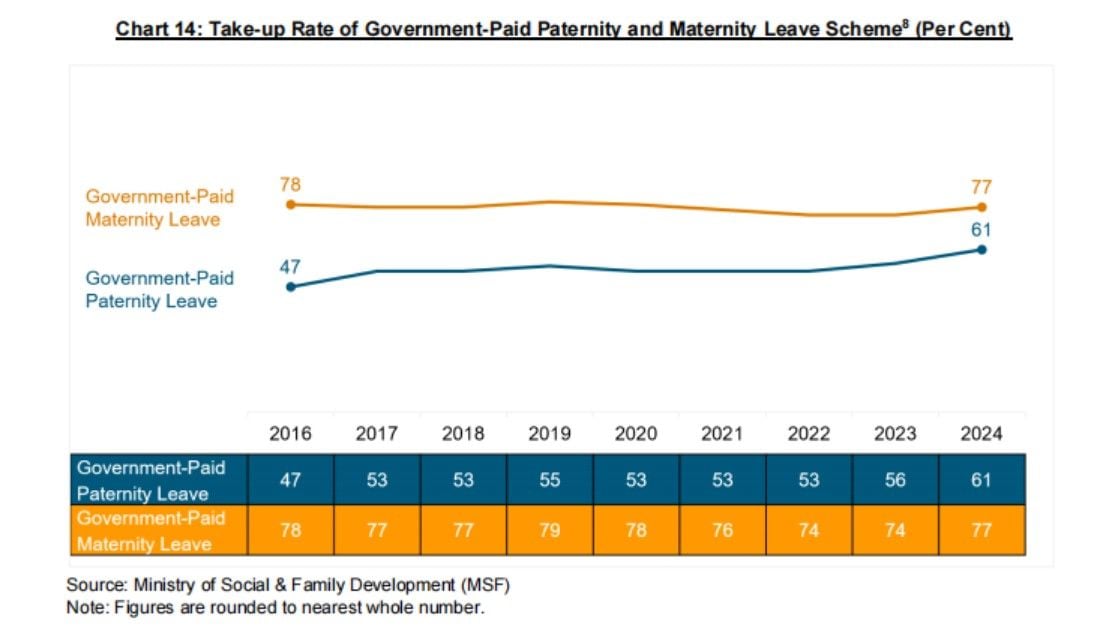
On a more positive note, fathers are taking up parental leave in greater numbers.
Government-Paid Paternity Leave take-up rose from 47 per cent for children born in 2016 to 61 per cent for those born in 2024, while fathers' take-up of childcare leave rose from 49 per cent to 54 per cent over the same period.
Access to flexible work arrangements has also improved sharply: 84.5 per cent of employees who needed such arrangements had access to at least one in 2024, up from 65.9 per cent in 2014. From 1 April 2026, the Government extended Shared Parental Leave from six to ten weeks.
Expanding preschool access and early childhood support
Preschool access and affordability continued to improve.
Full-day infant care places nearly tripled over the decade to 17,639, while childcare places nearly doubled to 205,234.
Median infant care fees for Singapore Citizen children fell to S$1,235 and childcare fees to S$680, after successive fee cap reductions at Anchor and Partner Operator preschools.
Out-of-pocket infant care expenses for a median-income household fell to 5.6 per cent of household income, from 6.8 per cent in 2021.
Behind the numbers, MSF also detailed quality-focused initiatives largely unreported elsewhere, including a refreshed Singapore Preschool Accreditation Framework (SPARK 2.0) launched in 2025, a new Quality Teaching Tool for the sector's more than 28,000 educators, and a "Quality Preschools 2030" vision announced at this year's Committee of Supply debate.
Referrals of children for medium to high levels of early intervention support eased to 2,300 in 2025 from a peak of 2,800 in 2022, while the number of children served in such programmes rose to 10,503.
Family resilience improves amid growing ageing challenges
Family ties data also revealed a widening care gap.
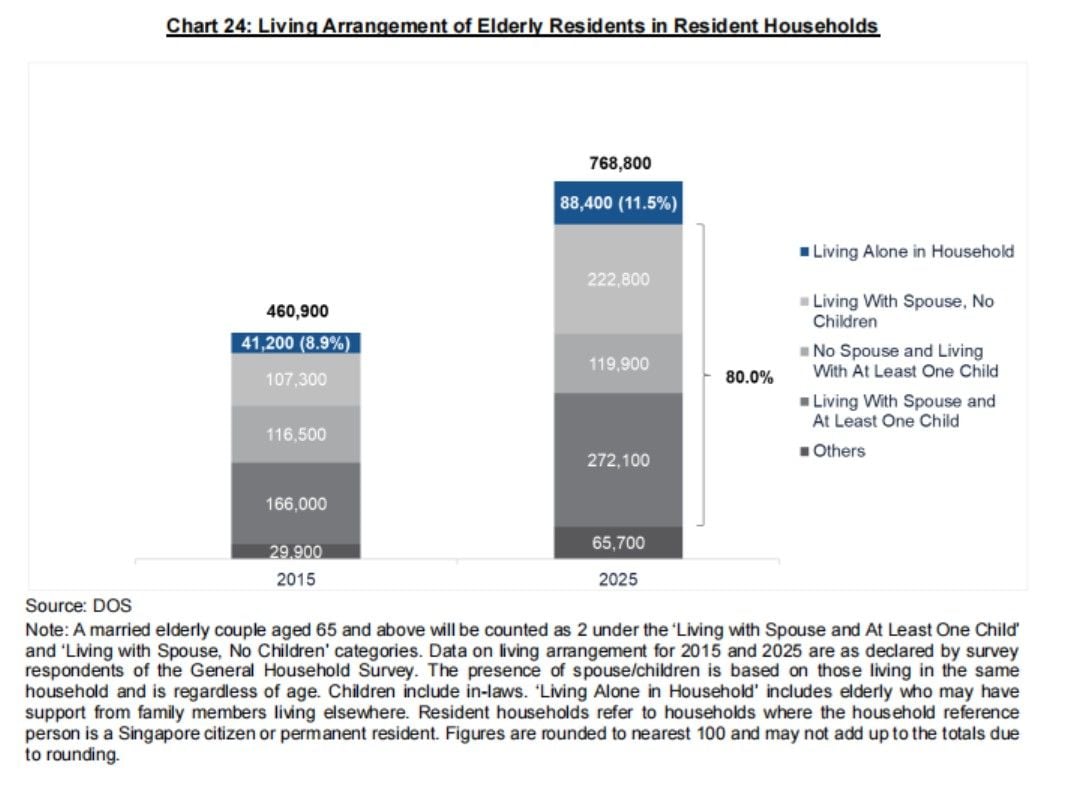
The number of residents aged 65 and above living alone more than doubled over the decade, from 41,200 to 88,400, even as the elderly resident population grew to 768,800.
Among survey respondents, 95.2 per cent aged 15 to 64 agreed it was their responsibility to care for their parents, up from 93.1 per cent in 2023.
Married respondents were more likely to report a close-knit family (93.8 per cent) than single (84.1 per cent) or divorced, separated or widowed respondents (81.3 per cent).
A separate 2025 Quality of Life study by the National Council of Social Service found caregivers scored lower than non-caregivers across physical, psychological, social relationships and environment domains, and were less satisfied with family support.
However, the two groups reported similarly high levels of happiness with their family relationships, and 92.2 per cent of caregivers said they could manage their responsibilities.
Overall, 90.7 per cent of families reported moderate to high resilience scores on the Walsh Family Resilience Questionnaire, up from 85.9 per cent in 2023, with married respondents scoring higher across all resilience domains than single or previously married respondents.
Among married respondents, 94.9 per cent said they were happy with their marriage and 88.3 per cent said they rarely or never considered ending it.
Government launches review of marriage and parenthood policies
To address the underlying trends, an interagency Marriage and Parenthood Reset Workgroup has been formed, chaired by Minister in the Prime Minister's Office, Second Minister for Finance and Second Minister for National Development Indranee Rajah.
Its members are drawn from the Ministry of Culture, Community and Youth, the Ministry of Education, the Ministry of Health, the Ministry of Manpower, MSF and the Ministry of Trade and Industry.
The workgroup will examine financial costs, work-life support, caregiving, housing, healthcare, preschool and education, and engage employers and the public before reporting consolidated findings in early 2027.