IRAS reminds nightclub operators of tax obligations on flower garland sales
IRAS has reminded nightclub operators that flower garland sales to performing artistes are taxable supplies subject to GST, income tax and, for non-resident performers, withholding tax.
- IRAS says flower garland sales are taxable services, not voluntary tips.
- GST applies to the full payment, not just the nightclub's share.
- Non-resident performers' earnings face 15 per cent withholding tax.

The Inland Revenue Authority of Singapore (IRAS) has reminded nightclub operators of their tax obligations relating to the sale of flower garlands, a practice in which customers pay to present garlands to performing artistes.
According to IRAS, these purchases, which can cost S$500 or more, are generally taxable supplies under the Goods and Services Tax (GST) Act. The authority said customers buying flower garlands are not simply purchasing flowers or giving a voluntary tip.
Instead, they are paying for the right to publicly honour a performing artiste and to take part in the entertainment experience offered by the nightclub. IRAS said this constitutes a supply of services and is therefore subject to GST.
What the practice involves
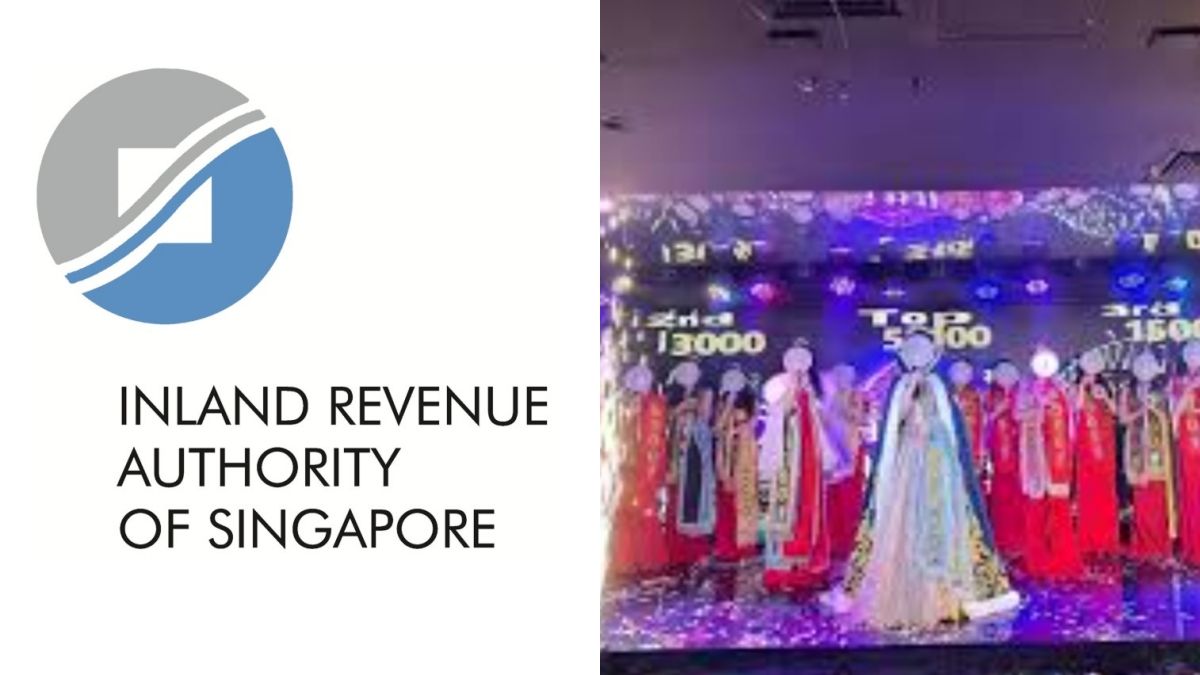
At some nightclubs, patrons can pay to have a flower garland placed around the neck of a performing artiste on stage, as a public gesture of appreciation during the performance. Prices vary widely, with garlands documented ranging from S$50 to as much as S$100,000.
The nightclub typically manages the entire process: it makes the garlands available, sets the price, collects payment from the customer and arranges for the garland to be presented to the artiste the customer names. The performing artiste generally receives an agreed cut of the proceeds, whether as a fixed share or as part of their overall pay.
Principal versus collecting agent
IRAS said the tax treatment turns on whether the nightclub is the principal making the sale or merely a collecting agent for the performing artiste. In most cases, it treats the nightclub as the principal.
This is because nightclubs typically manage the entire process, from making garlands available and setting prices to collecting payment and deciding how proceeds are distributed to performers. They also generally exercise significant control over the performing artistes' activities, which IRAS regards as the hallmark of a principal rather than an agent.
Performing artistes, by contrast, usually have little say over pricing, payment collection or how proceeds are shared, the authority said.
Full value subject to GST
IRAS clarified a common misconception that GST applies only to the portion of a customer's payment retained by the nightclub. This is incorrect, it said.
For example, if a nightclub keeps S$300 of a customer's S$500 payment and passes S$200 to the performing artiste, the entire S$500 remains subject to GST. IRAS said this is because the full amount represents the value of the service supplied by the nightclub acting as principal, regardless of how the proceeds are later divided.
Income tax and artificial income splitting
All revenue from flower garland sales must be recorded as part of a nightclub's gross income for tax purposes, IRAS said. Payments to performing artistes, whether structured as salaries or a share of garland sales, may qualify as deductible business expenses.
However, IRAS said some establishments have attempted to artificially split income across multiple entities operating from the same premises, for instance by attributing garland revenue to a separate entity while the nightclub continues to manage operations behind the scenes.
Where such arrangements lack genuine commercial purpose and serve only to reduce taxable income or avoid GST registration, IRAS said it may treat them as tax evasion.
Withholding tax on non-resident performers
IRAS also flagged withholding tax obligations, noting that many nightclub performing artistes are non-residents. Their income, including salaries and any share of flower garland sales, is subject to a 15 per cent withholding tax under Section 45GA of the Income Tax Act, as they are classified as public entertainers.
Nightclub operators must file and pay this withholding tax to IRAS by the 15th day of the second month from the date of payment to the non-resident performer.
"The tax treatment of flower garland sales in nightclub establishments hinges on three key factors: the nature of transaction, the contractual relationships involved and the specific facts of each case," IRAS said. It added that establishments must maintain proper record-keeping and comply with its guidelines to avoid inconsistencies and potential disputes.
Precedent: 2022 conviction over garland revenue
IRAS's reminder follows a case in which enforcement action was already taken over undeclared flower garland revenue. In September 2022, nightclub operator Soon Kok Khoon was jailed for more than 13 months and ordered to pay a penalty of S$630,861 after being convicted of GST evasion and money laundering offences.
Soon operated Club Posh Entertainment and West Palace Entertainment. The Singapore Police Force and IRAS found that in 2016, he instructed accountants at both clubs to omit sales revenue, largely from flower garland sales priced between S$50 and S$100,000, along with the associated output tax, from the clubs' GST returns.
Investigators said Soon directed staff to divert the clubs' sales revenue to two GST-unregistered shell entities using separate point-of-sale terminals, with the undeclared income falsely recorded as proceeds from fictitious souvenir sales. Staff were also told to understate those souvenir sales to keep the shell entities below the GST registration threshold.
He was convicted of three counts of GST evasion, with five further charges taken into consideration, and three counts of money laundering involving the disguise of property worth S$3,214,389, with five additional charges taken into consideration.
Authorities have urged businesses or individuals with past tax mistakes to make voluntary disclosures, noting that IRAS treats such disclosures as a mitigating factor when deciding on enforcement action.