Taiwan's Army to deploy drone battalion in Penghu to bolster early warning
Taiwan's Army will establish a drone battalion in offshore Penghu County, likely in July, upgrading an existing squadron to strengthen early warning, anti-blockade and anti-landing capabilities in the Taiwan Strait.
- Taiwan's Army to set up a drone battalion in offshore Penghu, likely in July.
- The unit will upgrade from a squadron under Penghu Defense Command in Magong.
- Deployment extends early warning, anti-blockade and anti-landing capabilities.

Taiwan's Army will soon deploy a drone battalion in the offshore Penghu County, significantly strengthening its early warning capabilities in the event of an enemy attack, according to a military source with knowledge of the matter.
The move will expand the area covered by Taiwan's early warning mechanisms. It will also enable the military to conduct anti-blockade operations closer to an adversary, and to swiftly deploy kill chains using drones and anti-ship missiles.
The drone battalion will be established in Penghu County, located in the Taiwan Strait about 45 kilometres off the coast of the main island. It will be upgraded from an existing squadron stationed there.
The battalion in Penghu will likely be launched in July and operate under the ROC Army Penghu Defense Command in Magong, the Chinese-language Liberty Times reported on Thursday. The report did not specify the proposed size of the unit.
Offshore defence commands and brigade-level units on the main island have progressively established drone squadrons. According to military officials, these squadrons under the offshore defence commands will be upgraded in phases, with Penghu the first scheduled for promotion from squadron to battalion in July.
Army Chief of Staff Chen Chun-yi told legislators in October 2025 that the Army would establish a drone battalion in each of Taiwan's five theatres of operations. These cover northern, central, southern and eastern Taiwan, as well as offshore Penghu County.
The Army established three drone battalions in April this year, in the country's northern, central and southern regions.
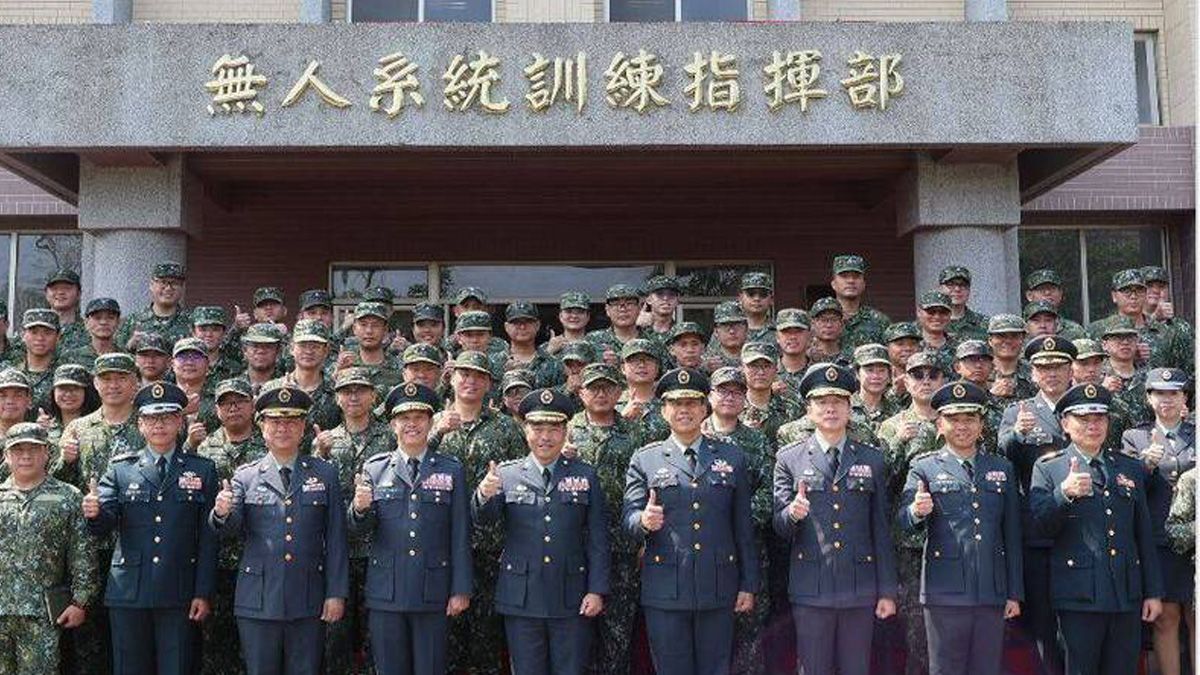
The expansion reflects a wider effort to keep pace with international developments in unmanned systems. To support combined air, land and sea unmanned operations, the Army established an Unmanned Systems Training Command on 10 April.
That was followed on 29 and 30 April by a two-day drone training evaluation, which assembled all of the Army's drone units for a combat-readiness assessment. The evaluation centred on immersive, or first-person view (FPV), drones and bomb-dropping drones.
The Unmanned Systems Training Command was inaugurated at the Neijiao camp in Tainan in April this year. Established less than 16 months after the launch of a drone training centre in January 2025, it set a record for organisational reform within the Army.
Army Commander General Lu Kun-hsiu said during the June military affairs review that drone training in the second half of the year would move towards integrated reconnaissance-strike, beyond-visual-range attack and night attack capabilities.
In early June, the Sixth Army Corps conducted a live-fire drone and Tien Ma exercise. The drill used the US-supplied Altius-600M loitering munition and Javelin missiles, with the Altius-600M reportedly achieving a 100 per cent hit rate.
The Altius-600M conducted its first live-fire engagement against a maritime target in the Yilan area, with all munitions reportedly striking their targets. In Tainan, FPV drones carrying 3.5-inch high-explosive anti-armour warheads struck simulated enemy CM12 tanks, CM24 armoured vehicles and Humvees.
Bomb-dropping drones simulated battlefield conditions in the same exercise, distinguishing between single-aircraft and two-aircraft coordinated strike tactics.
The Marine Corps has separately fielded the domestically produced Chin Feng I attack drone. Troops have fired it from beaches and from fast boats during maritime tests, and it featured this week in joint live-fire drills against sea targets from shore positions.
Su Tzu-yun, a research fellow at Taiwan's government-funded Institute for National Defense and Security Research, described the deployment of drones on the offshore islands as strategically significant.
The move would leverage the strengths of drones, namely their long-range reconnaissance and beyond-visual-range striking capabilities, Su said. This would significantly strengthen Taiwan's defence posture and anti-landing efforts.