Singapore to review Zero Waste Masterplan as recycling rate falls and waste disposal hits record high
Singapore's overall recycling rate fell to 52 per cent in 2025, well below the 70 per cent target for 2030. The government will review the Zero Waste Masterplan, citing shifting global recycling economics and a record volume of waste disposed.
- Singapore's overall recycling rate fell to 52 per cent in 2025, below the 59 per cent recorded in 2019.
- The Zero Waste Masterplan will be reviewed by 2027, covering targets and Semakau Landfill capacity.
- A new national research centre, TREASURES, was launched with S$35 million in funding.

Singapore will review its Zero Waste Masterplan after recycling rates declined and the amount of waste disposed reached a record high, Senior Minister of State for Sustainability and the Environment Janil Puthucheary announced on Wednesday, 17 June 2026.
The overall recycling rate was 52 per cent in 2025, moving further from the goal of 70 per cent by 2030. The figure stood at 59 per cent in 2019, when the masterplan was launched.
Dr Puthucheary was speaking at Catalyst 2026, an event organised by the National Environment Agency (NEA) and attended by about 300 industry leaders, experts and policymakers in the environmental services sector.
"We have to have an honest examination of these numbers," he said. He pointed to significant shifts in the global economics of recycling that have made the activity harder to sustain commercially worldwide.
He cited logistics disruptions, volatile commodity prices and tightening import restrictions. Paper prices have been significantly depressed, he said, while demand for recycled plastics has been difficult to secure.
The domestic recycling rate fell from 17 per cent in 2019 to 11 per cent in 2025, against a 2030 target of 30 per cent. The non-domestic rate fell from 73 per cent to 67 per cent, short of an 80 per cent goal.
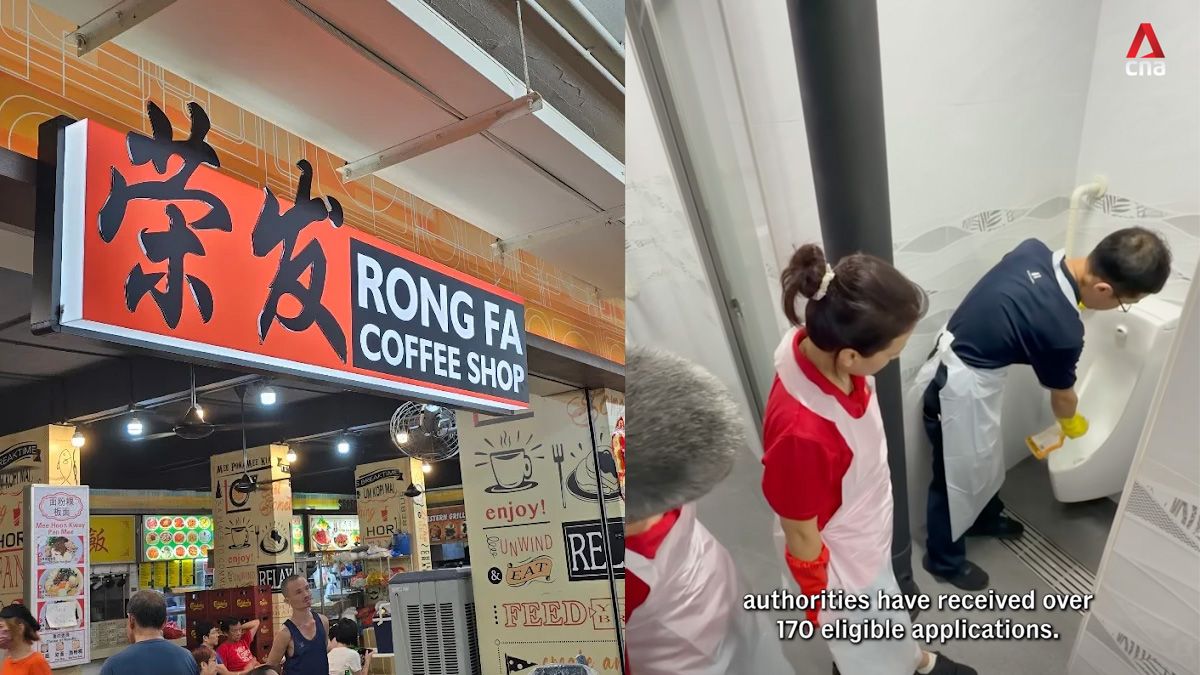
Domestic waste refers to waste from households and trade premises such as shophouses, hawker centres and educational institutions. Non-domestic waste is generated at industrial and commercial premises.
The review is expected to be completed in 2027, with work beginning in the coming months. The Ministry of Sustainability and the Environment and NEA will engage the public, industry and non-governmental organisations on ideas and proposals.
Dr Puthucheary said domestic recycling would be a priority. A key part of the review will examine how Singapore can recover cleaner, less contaminated recyclables, including a review of the National Recycling Programme launched in 2001.
The blue recycling bins, part of that programme, will also be examined. They have been plagued with contamination rates of about 40 per cent since 2017.
He spoke of the familiar sight of blue bins overflowing with cardboard, which he described as a telling sign that households and businesses generate significant amounts of cardboard and are eager to recycle responsibly.
The review will also consider whether recycling targets should be adjusted, how waste statistics are reported, and the lifespan of Semakau Landfill, Singapore's only landfill, which is expected to run out of space by around 2035 based on a 2015 projection.
Measures to ensure sufficient landfill capacity beyond 2035 will form another component of the review, Dr Puthucheary said.
In 2025, Singapore logged its highest amount of waste disposed, at about 3.35 million tonnes, up from about 3.33 million tonnes in 2024.
Despite the falling proportion of waste recycled, the absolute amount recycled has increased, Dr Puthucheary noted. He said Singapore is recycling more today than in previous years, but the proportion of waste recycled has reduced.
According to NEA's 2025 household recycling survey, 78 per cent of households recycle, up from 72 per cent in 2023. Each person generated about 0.83kg of waste a day in 2025, a 21 per cent reduction from 2015.
NEA said it would focus efforts on food waste, paper, cardboard and plastics, which make up the largest share of waste not recycled. The recycling rate for paper and cardboard slipped from 32 per cent in 2024 to 31 per cent in 2025.
Plastic recycling, among Singapore's weakest-performing streams, fell from 5 per cent to 4 per cent over the same period. Food waste recycling remained at 18 per cent across both years.
NEA attributed the declines to rising collection and freight costs and volatile global market conditions affecting commodity prices. Given Singapore's small market, most recyclables are exported overseas for processing, making them susceptible to external factors.
Since December 2025, public waste collectors have provided dedicated collection channels for paper and cardboard, including metal cages in selected neighbourhoods. From 2028, NEA expects to mandate segregation of food waste at existing commercial and industrial buildings.
The Beverage Container Return Scheme, fully operational from 1 October, is expected to boost recycling rates. NEA aims to collect 60 per cent of marked containers within the first year, rising to 80 per cent thereafter.
Dr Puthucheary also announced the launch of TREASURES (Towards Resource Efficiency and Sustainability for Urban Environments), Singapore's first national research centre dedicated to residues and toxic industrial waste management.
Supported with S$35 million, the centre opened its inaugural grant call on 17 June, running until 17 August. It will be jointly led by NEA and Nanyang Technological University, with participation from other institutes of higher learning.
The centre will explore recovering value from difficult-to-recycle waste and ways to transform Semakau from a landfill into a resource recovery hub. The government is also planning a pilot carbon capture project at a waste-to-energy plant.
Noting that 2026 is the Year of Climate Adaptation, Dr Puthucheary said the masterplan review was not simply a government blueprint refresh but an invitation for every Singaporean to help shape how the country lives in the decades ahead.