
Former Gojek co-founder Nadiem Makarim sentenced to 10 years in Indonesia corruption trial
Indonesia's former education minister and Gojek co-founder Nadiem Makarim has been sentenced to 10 years in prison after being convicted over a controversial Chromebook procurement programme. The court also ordered him to pay Rp809.6 billion in restitution, with an additional prison term if unpaid.
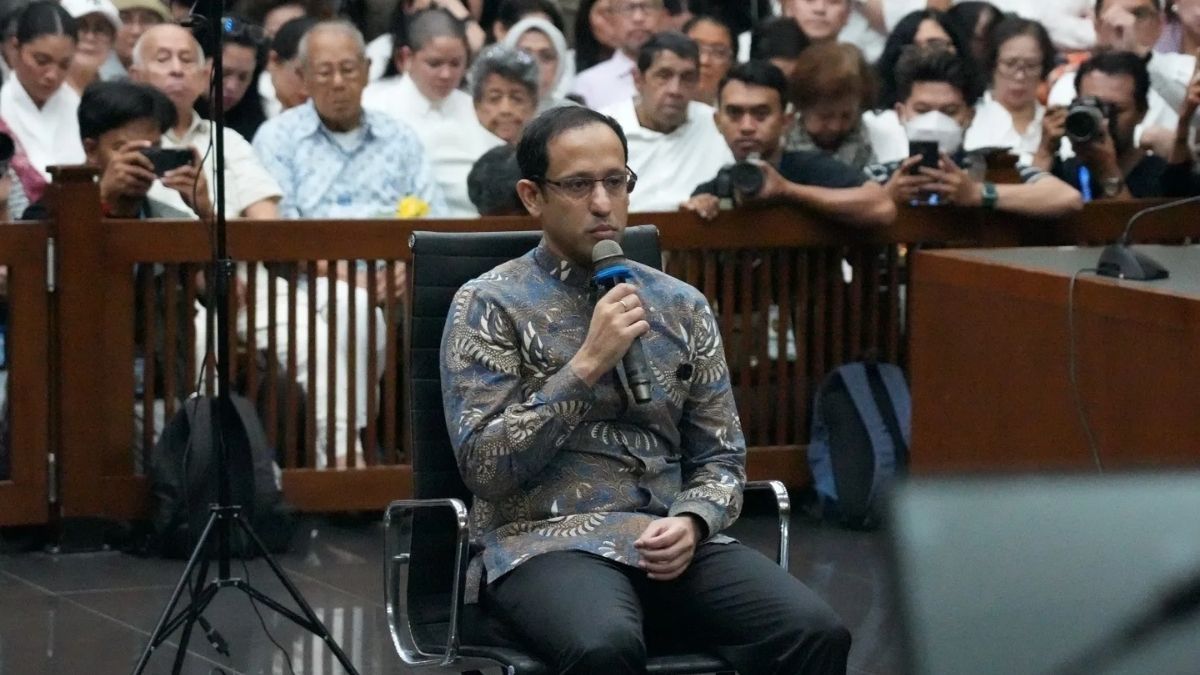
- Nadiem Makarim received a 10-year prison sentence under a subsidiary corruption charge.
- The court ordered Rp809.6 billion in restitution and a Rp1 billion fine.
- Makarim denied wrongdoing, appealed the verdict and challenged the trial's procedures.

An Indonesian court on Tuesday sentenced former education minister and Gojek co-founder Nadiem Makarim to 10 years in prison after finding him guilty of corruption linked to the procurement of Chromebook laptops for schools between 2021 and 2022. The court also ordered him to pay Rp809.6 billion (about US$45 million) in restitution and a Rp1 billion fine, while acquitting him of the prosecution's primary charge but convicting him under a subsidiary corruption charge.
Makarim, 41, pleaded not guilty and immediately announced plans to appeal the ruling. His legal team also said it would report the trial judges to Indonesia's Judicial Commission, alleging procedural irregularities during the proceedings.
The verdict was delivered by the Central Jakarta Corruption Court on Tuesday by a panel chaired by Judge Purwanto S. Abdullah.
The judges found Makarim guilty under the subsidiary indictment, ruling that he had abused his authority while serving as minister. He was sentenced to 10 years' imprisonment and fined Rp1 billion, with an additional 190 days' imprisonment if the fine is not paid, according to the ruling reported by detik.
The court also ordered Makarim to pay Rp809,597,125,000 in restitution. Under the ruling, he must pay the amount within one month after the verdict becomes legally binding. Otherwise, prosecutors may seize and auction his assets, and if the amount remains unpaid due to insufficient assets, he will serve an additional five years in prison.
The judges rejected prosecutors' request for an additional Rp4.8 trillion restitution order, saying the legal mechanism used was inappropriate for the case. However, the panel recommended that Indonesia's Attorney General's Office continue investigating the Rp4.8 trillion through a separate money laundering investigation.
Judges cite conflict of interest and Google investment
The case centred on the Education Ministry's procurement of Chromebook laptops and Chrome Device Management (CDM) systems for Indonesian schools between 2021 and 2022.
According to prosecutors, the ministry proceeded with the purchases despite having determined in 2018 that Chromebooks required reliable internet access, making them unsuitable for many remote areas of Indonesia.
Prosecutors argued that Makarim favoured Google, an investor in Gojek, after meeting Google representatives in 2020. They alleged that procurement specifications were designed to fit only Chrome OS, effectively making Google "the sole controller of the education ecosystem in Indonesia", according to the BBC.
The court ruled that Makarim, while serving as minister, issued Education Ministry Regulation No. 5 of 2021, which approved Chrome OS specifications and enabled Chromebook procurement worth more than Rp1.5 trillion, fundamentally benefiting Google as the software licence holder.
According to the judges, Google subsequently invested US$69 million in PT Aplikasi Karya Anak Bangsa (AKAB), the company founded by Makarim, in August 2021 as part of a wider investment package totalling US$786 million. The panel said the timing and substance of the investment were "not a coincidence" but demonstrated an intention to benefit Makarim's corporate interests.
The court further ruled that following Google's investment, PT AKAB ceased capital financing to PT Gojek Indonesia worth Rp809.5 billion, with the same amount repaid on the same day under a loan agreement. The judges said the causal chain between the policy and the movement of funds into Makarim's corporate ecosystem could be clearly traced.
Although the panel concluded it was not proven that Makarim had unlawfully enriched himself personally, it found that he had abused his authority and committed corruption by acting under a conflict of interest.
Sentence includes mitigating and aggravating factors
In explaining the sentence, the judges said the offence was carried out in a "planned, structured and systematic" manner, caused substantial state losses and adversely affected education, particularly for children in remote, frontier and underdeveloped regions.
The panel also said Makarim's actions contradicted the government's anti-corruption commitments and noted that, as a minister, he should have set an example. The judges added that his financial circumstances meant there was no economic necessity motivating his actions.
As mitigating factors, the court said Makarim had no previous criminal convictions, had behaved politely and cooperatively throughout the trial, and had previously been recognised for contributions to innovation in education and technology.
Defence rejects ruling and announces appeal
Following the verdict, Makarim rejected the court's decision and confirmed he would appeal.
"I will continue to fight... I will immediately file an appeal to continue fighting for the truth... I will not stop," he said after the hearing.
Makarim said he effectively faced a 15-year prison sentence because he could not pay the court-ordered Rp809.6 billion restitution. He maintained that he had never personally received the Rp809.5 billion, saying the funds "never touched me even once" and remained within PT AKAB's accounts.
Speaking to reporters, Makarim added: "I do not know whom I should ask for help, or where I can seek justice. My only hope is in the Indonesian people, in those who still believe that truth still exists in this country."
Legal team to report judges
Makarim's lawyer, Ari Yusuf Amir, said the defence would report the trial judges to Indonesia's Judicial Commission in addition to filing an appeal.
Amir disputed the judges' conclusion that Makarim had a conflict of interest involving Google, arguing that evidence presented during the trial, including testimony from Google witnesses called by the defence, showed the Chromebook procurement followed normal commercial practices.
He also warned the verdict could discourage professionals from the private sector from entering public service. "This will become a bad precedent for ministers coming from the private sector."
Another defence lawyer, Dody S. Abdulkadir, said Makarim had not been given an opportunity to state his legal position immediately after the verdict was read.
Court explains procedure after defence protest
According to CNN Indonesia, the panel closed the hearing immediately after reading the judgment, stating that the full written decision would be uploaded and made available to both parties.
Makarim's legal team objected, saying the judges had not asked whether the defendant accepted the verdict or intended to appeal.
Central Jakarta District Court spokesperson M. Firman Akbar said this did not violate court procedure. "In judicial practice, it is not a problem if that is not asked, because the defendant's rights remain protected within the time limits provided by law to accept the decision, request time to consider it, or file an appeal."
Supporters gather outside court
Before the hearing, dozens of supporters, including Gojek drivers, gathered outside the Jakarta courthouse carrying banners reading "We are with Nadiem" and "Free Nadiem", according to the BBC.
During the proceedings, supporters watched the hearing through a live stream from a nearby room. When the verdict was delivered, Makarim became visibly emotional and cried, while supporters outside the courtroom booed. He later embraced several supporters as he left the courthouse.
"It's been difficult for almost 10 months. As a family, we have continued to pray, fight, and stand by him throughout this time," his mother-in-law, Sania Makki, told the BBC.
Critics question prosecution as political debate grows
The conviction has prompted criticism from some analysts and activists who questioned the strength of the prosecution's case.
"The eradication of corruption is being used to attack those who are not liked, or those who are critical of people in power," lawyer and activist Todung Mulya Lubis told the BBC.
Political activist Andovi da Lopez said the case had created anxiety among young Indonesians considering public service.
Usman Hamid, executive director of Amnesty International Indonesia, told the BBC that many young Indonesians viewed Makarim as someone seeking reform within a system facing structural problems.
The BBC also noted that observers have compared Makarim's case with those of former trade minister Tom Lembong and Indonesian Democratic Party of Struggle (PDI-P) official Hasto Kristiyanto, both political allies of former president Joko Widodo who were convicted of corruption before later receiving pardons from President Prabowo Subianto in the name of national reconciliation.