Blaze destroys Reikado Hall home to Japan’s famed Eternal Flame
Reikado Hall on Japan’s Miyajima Island has been destroyed in a fire. The historic Buddhist structure housed the famed “Eternal Flame”, believed to have burned continuously for nearly 1,200 years since being lit by monk Kukai. Temple officials say the sacred flame was saved.
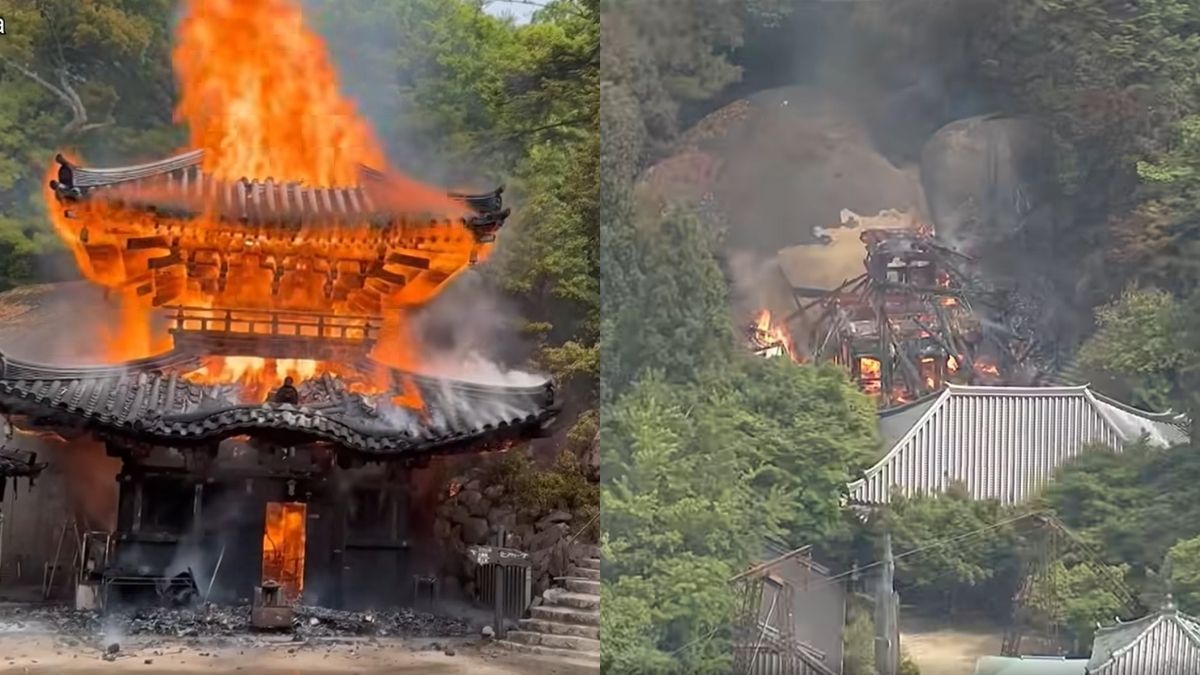
- Reikado Hall on Miyajima Island was destroyed in a fire on 20 May 2026.
- The hall housed the “Eternal Flame” believed to have burned for nearly 1,200 years.
- Temple officials said monks safely moved the sacred flame before the blaze spread.

A historic Buddhist hall on Japan’s Miyajima Island has been destroyed in a fire, marking the latest in a series of blazes affecting religious and heritage sites across the country this year.
The Reikado Hall, located near the summit of Mount Misen in Hatsukaichi, Hiroshima Prefecture, was engulfed by flames on the morning of 20 May 2026.
Firefighters received an emergency call at approximately 8:30 a.m. reporting that the hall was on fire.
The building formed part of the Daishoin temple complex, one of the principal temples of the Omuro School of Shingon Buddhism.
Authorities said the blaze later spread into nearby woodland before firefighters managed to bring the situation under control shortly after 10:30 a.m.
No injuries were reported.
According to local fire authorities, around 30 firefighters were deployed to the scene alongside multiple fire engines and helicopters.
The surrounding mountainous terrain complicated firefighting efforts as flames spread to nearby trees and adjacent structures.
A hut located near the hall was also destroyed in the fire.
Reports stated that approximately 30 square metres of surrounding area were burned.
The Reikado Hall was best known as the home of the “Kiezu-no-hi”, or “Eternal Flame”, believed to have burned continuously for nearly 1,200 years.
According to temple tradition, the sacred fire was originally lit in 806 by the Buddhist monk Kukai, also known as Kobo Daishi, during ascetic training on Mount Misen.
Kukai, founder of the Shingon school of Buddhism, remains one of Japan’s most revered religious figures.
The Eternal Flame later became symbolically linked to Hiroshima’s post-war peace movement.
Temple authorities say the flame was used as one of the source fires for the Flame of Peace at Hiroshima Peace Memorial Park.
The memorial flame in Hiroshima is intended to remain burning until all nuclear weapons are eliminated worldwide.
Temple officials said monks successfully moved the sacred flame to another location before the blaze destroyed the hall.
NipponTV reported that the Eternal Flame itself remained unharmed despite the destruction of the building.
Daishoin Temple, which has served as steward of Mount Misen’s religious sites for centuries, confirmed that the flame was safely preserved during the emergency response.
The destruction of Reikado Hall has drawn renewed attention to the vulnerability of Japan’s historic wooden religious structures to fire.
Many temples and shrines across Japan are built primarily from timber and are often located in forested or mountainous areas that can complicate firefighting access.
The hall had previously suffered extensive damage from fire in 2005.
That earlier blaze completely destroyed the structure, prompting reconstruction work the following year to preserve both the historic hall and the Eternal Flame.
Investigators at the time reportedly believed the 2005 fire was caused by burning dead wood and other combustible materials inside the building.
Police and fire authorities are continuing to investigate the cause of Wednesday’s fire.
Officials have not yet announced whether the latest blaze may have originated inside the hall or from surrounding vegetation.
Miyajima Island, formally known as Itsukushima, is one of Japan’s most significant religious and cultural destinations.
The island is internationally recognised for the iconic floating torii gate of Itsukushima Shrine and attracts millions of visitors annually.
Mount Misen itself is regarded as a sacred mountain within Japanese Buddhism and has long been associated with spiritual pilgrimage and ascetic practice.
Daishoin Temple occupies a particularly important place within Miyajima’s religious history.
Founded in 806, the temple has maintained close historical connections to Mount Misen’s network of prayer halls, meditation sites and sacred fires.
The destruction of Reikado Hall has prompted expressions of sympathy from local residents and visitors familiar with the site’s religious and historical importance.
Get Hiroshima reported that community members and supporters offered condolences to the Yoshida family, temple monks and staff following the fire.
The incident also forms part of a broader pattern of fires involving historic religious structures in Japan in recent months.
Concerns have increasingly focused on preservation challenges facing centuries-old wooden buildings exposed to environmental hazards, ageing infrastructure and fire risks.
Authorities are expected to assess the extent of structural damage to nearby sites and determine whether additional fire prevention measures are necessary around Mount Misen’s religious complexes.
The future reconstruction of Reikado Hall has not yet been announced.
However, the successful preservation of the Eternal Flame means one of the site’s most symbolically important elements has survived despite the destruction of the building itself.