Indonesian documentary on Papua sparks national debate over censorship and democracy
Public screenings of Pesta Babi have triggered a nationwide debate in Indonesia over Papua, freedom of expression, militarisation, and documentary filmmaking after repeated disruptions by authorities and security personnel.
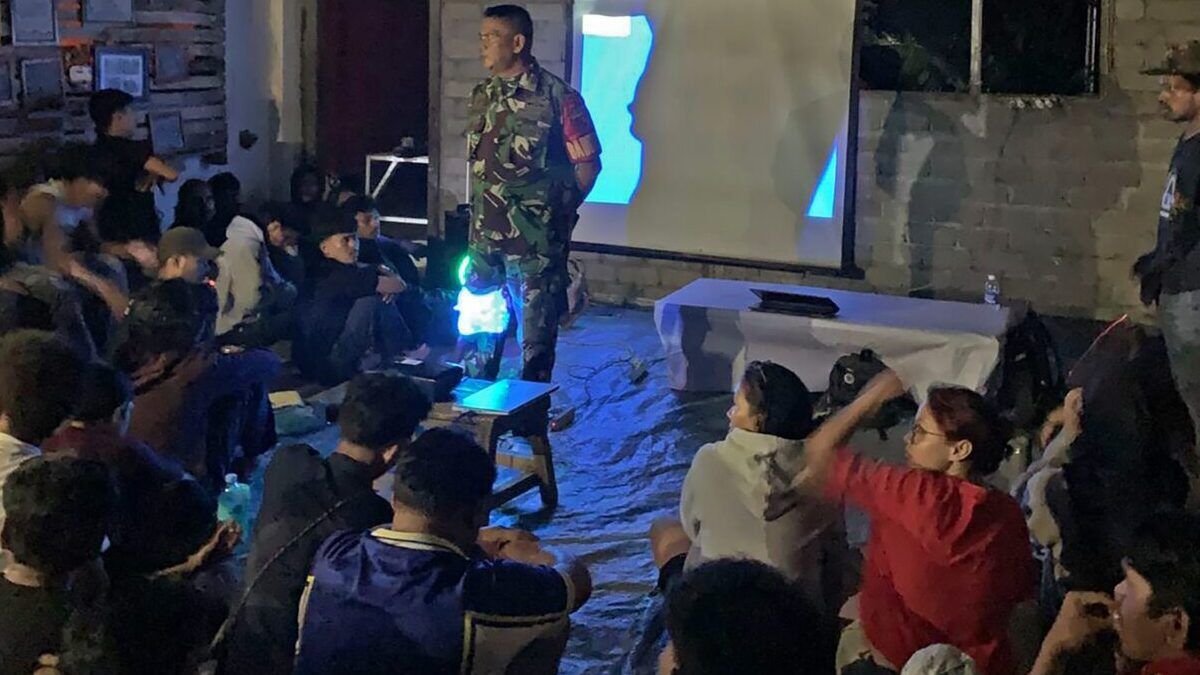
- Community screenings of Pesta Babi have expanded rapidly despite repeated disruptions and intimidation.
- The documentary examines industrial projects and indigenous land conflicts in Papua.
- Government officials denied ordering bans while civil society groups condemned the dispersals.

Public screenings of the documentary Pesta Babi: Kolonialisme di Zaman Kita (“Pig Feast: Colonialism in Our Time”) have become the centre of a widening national debate in Indonesia over Papua, freedom of expression, militarisation, and the role of critical documentary filmmaking in democratic society.
The film, directed by Indonesian journalist Dandhy Laksono and anthropologist Cypri Dale, examines large-scale government-backed agricultural and industrial projects in Papua and their impact on indigenous communities, forests, and customary land rights.
Since its release in April 2026, screenings across Indonesia have faced intimidation, surveillance, and forced dispersals, according to organisers and civil society groups. At the same time, public demand to watch the documentary has continued to expand, with thousands of requests submitted for community screenings nationwide.
Documentary focuses on indigenous communities and national projects
The 95-minute documentary centres on indigenous communities in South Papua — including the Marind, Yei, Awyu, and Muyu peoples — confronting industrial-scale food and energy projects linked to Indonesia’s National Strategic Projects programme.
The film portrays the conversion of forests and customary lands into oil palm estates, sugar plantations, and large-scale food production zones in Merauke, Boven Digoel, and Mappi regencies. According to the filmmakers, the projects cover approximately 2.5 million hectares.
Produced through a collaboration involving Watchdoc, Ekspedisi Indonesia Baru, Greenpeace Indonesia, Jubi, Pusaka Bentala Rakyat, and LBH Papua Merauke, the documentary combines ethnographic storytelling with investigations into plantation ownership structures and corporate networks linked to the projects.
The title Pesta Babi refers to traditional Papuan communal ceremonies involving pig feasts, while the subtitle “Colonialism in Our Time” frames the film’s central argument that contemporary state-led development projects in Papua resemble colonial patterns of land control and resource extraction.
Speaking during a discussion following a screening at Rugos Space in Bandung on 18 April, Papuan student activist Fransiska, known as Siska, said the documentary reflected the realities currently faced by Papuans.
“Papuan people have homes, yet they cannot live in their own homes,” she said.
Siska said Papua’s problems extended beyond militarisation and economic development, involving political arrangements and regulatory structures dating back decades.
She referred to international agreements surrounding Papua’s integration into Indonesia during the 1960s, arguing that Papuan communities had not been directly involved in those processes.
She described current conditions as a continuation of colonialism operating through laws, regulations, and state policy.
“Colonialism today operates systematically, entering government structures and regional policies, and ultimately supporting the continuation of exploitation in Papua,” she said.
Filmmakers describe Papua as reflection of Indonesia
Co-director Cypri Dale said the documentary was conceived not only as a film about Papua, but also as a reflection on Indonesia itself.
He said the film drew inspiration from a speech delivered by Indonesia’s first president, Sukarno, during the 1955 Asian-African Conference in Bandung, where Sukarno questioned whether colonialism had truly ended.
“That spirit became the basis for how we read Papua,” Cypri said.
However, Cypri also argued that Indonesia’s campaign to secure international support for Papua during its confrontation with the Netherlands later evolved into a broader state project involving mining expansion, military operations, and large-scale development schemes.
He cited the entry of Freeport-McMoRan into Papua, the 1969 Act of Free Choice, and subsequent National Strategic Projects as key turning points.
Initially conceived as an ethnographic portrait of everyday Papuan life and cultural resistance, the documentary’s direction shifted during production after the filmmakers witnessed forest clearance, land seizures, and a heavy military presence in civilian areas.
Cypri said the experience transformed the project into a broader examination of power, development, and state control.
Community screenings expand across Indonesia
The documentary was first screened publicly at Taman Ismail Marzuki on 12 April 2026, after earlier preview screenings in Papua, New Zealand, and Australia.
Rather than releasing the film immediately online, the filmmakers adopted a community-screening model. Since 27 April, members of the public have been permitted to organise screenings provided at least 10 people attend.
According to Greenpeace Indonesia, by 20 May there had been approximately 11,000 requests to organise screenings, with events already held at more than 1,600 locations nationwide.
Screenings have taken place in university classrooms, cafés, NGO offices, church halls, and public courtyards, often accompanied by panel discussions and debates.
In Jayapura on 20 May, around 1,000 people attended a screening organised by the Synod of the Evangelical Christian Church in Tanah Papua.
The event included an online discussion with Dandhy Laksono and drew applause from audience members.
Andrikus Mofu, chairman of the church synod, said indigenous communities across Papua were facing mounting pressure on their ancestral lands.
“Threats like these are also being experienced by indigenous communities in other parts of Papua. We must struggle together to protect our land,” he said.
Audience member Yalince, a resident of Central Papua, said the film had helped broaden awareness outside Papua regarding the marginalisation of indigenous communities.
“Our brothers and sisters in western Indonesia are becoming more aware that we indigenous communities are increasingly marginalised by the presence of these state programmes,” he said.
Papua Provincial Legislative Council deputy speaker Mukry M Hamadi said the film should be treated as a form of public education rather than restricted.
“Instead, it should be given space as a form of public education so society can better understand the issues in Papua,” he said.
Anthropologist Hanro Lekitoo warned that environmental destruction in Papua could threaten the survival of indigenous cultures.
“Of the hundreds of ethnic groups in Papua, five have already become extinct. Under current conditions, do we want to see more disappear?” he said.
Screenings face disruption and intimidation
Despite growing public interest, screenings in several regions have faced disruption.
Civil society organisations and the filmmakers said at least 21 incidents involving intimidation or forced dispersal had occurred by mid-May.
According to reports compiled by Watchdoc and the Legal Aid Foundation of Indonesia (YLBHI), incidents included surveillance by intelligence officers, requests for organisers’ identities, pressure on venues to cancel screenings, and direct intervention by security personnel.
One widely publicised incident occurred in Ternate, North Maluku, where a public screening organised by the Aliansi Jurnalis Independen (AJI) Ternate and the Society of Indonesian Environmental Journalists at Benteng Oranje was dispersed by military personnel on 9 May.
Ternate Military District Commander Colonel Jani Setiadi said authorities considered the title and promotional materials “provocative” and feared they could create public unrest or ethnic and religious sensitivities.
View this post on Instagram
AJI Ternate chairperson Yunita Kaunar condemned the intervention as intimidation against freedom of expression and democratic space.
Other reported disruptions took place at University of Mataram, Universitas Pendidikan Mandalika, and Universitas Islam Negeri Mataram in West Nusa Tenggara.
At University of Mataram, Deputy Rector Sujita said authorities halted a screening “to maintain stability”, while rector Sukardi later stated that the action was intended to preserve public order rather than suppress expression.
Watchdoc said intimidation had also occurred in East Nusa Tenggara, West Sumatra, Yogyakarta, and Lombok.
Government officials reject formal ban
Senior Indonesian officials have publicly denied issuing orders to prohibit screenings.
Coordinating Minister for Law, Human Rights, Immigration and Corrections Yusril Ihza Mahendra said the government had not instructed authorities to disperse screenings.
“Just let the public watch it, and afterwards please hold discussions and debates,” Yusril said.
He described criticism presented in the documentary as “perfectly normal”, although he acknowledged that the title and some narratives were controversial.
Yusril also rejected comparisons between National Strategic Projects and colonialism, arguing that Papua was an integral part of Indonesia and that development programmes were intended to improve welfare.
Army Chief of Staff Maruli Simanjuntak likewise said the military leadership had not ordered local units to disperse screenings.
According to Maruli, decisions were taken locally due to security concerns.
“The dispersals were carried out by local governments for regional security reasons,” he said.
Maruli also questioned the funding sources behind the documentary and said the military’s presence in Papua was intended to assist communities lacking access to schools and clean water.
Human Rights Minister Natalius Pigai criticised the dispersals, arguing that films could only be banned through court rulings.
“Such a ban can only be imposed through a court decision,” he said.
House Speaker Puan Maharani said parliament would discuss the issue after learning of the controversies surrounding the film.
Civil society groups condemn restrictions
A coalition of civil society organisations, including AJI, YLBHI, ICJR, ELSAM, and Indonesia Corruption Watch, issued a joint statement condemning the dispersals.
The coalition argued that restrictions on screenings violated constitutional protections for freedom of expression, access to information, and cultural participation.
The statement said security forces had no authority to determine what citizens could or could not watch.
“Whether to watch or not watch a film is the right of citizens. The state and security forces have no right to make that decision on behalf of the public,” the coalition said.
The groups also argued that military involvement in cultural and intellectual activities contradicted the legal role of Indonesia’s armed forces.
According to the coalition, intimidation surrounding screenings risked creating a wider climate of self-censorship among artists, students, filmmakers, and cultural organisations.
Long history of documentary restrictions
Restrictions affecting Pesta Babi follow a longer history of censorship and pressure surrounding critical documentaries in Indonesia.
Documentaries dealing with human rights abuses, political violence, militarisation, or state policy have frequently encountered barriers to public screening since the Reformasi era began in 1998.
In 2006, the Jakarta International Film Festival attempted to screen documentaries by Australian filmmaker William Nessen about conflicts in Aceh and Timor-Leste, but Indonesia’s Film Censorship Board refused screening certificates.
In 2011, Prison and Paradise by director Daniel Rudi Haryanto was denied distribution approval on the grounds that it allegedly contained misleading and propagandistic content.
Other documentaries associated with Dandhy Laksono, including Alkinemokiye, Jakarta Unfair, and Sexy Killers, also experienced disruptions or bans during public screenings.
In 2019, Dandhy himself was named a suspect under Indonesia’s Electronic Information and Transactions Law over comments regarding Papua posted on social media.
Community screenings have therefore become a major alternative distribution method for politically sensitive documentaries in Indonesia.
This model has roots in “sinema ngamen” and “sinema jemuran”, concepts promoted by filmmaker Gotot Prakosa during the 1980s to encourage screenings outside conventional cinemas.
Documentaries such as The Act of Killing by Joshua Oppenheimer and The Look of Silence later adopted similar grassroots distribution strategies.
Filmmakers reject immediate online release
Despite increasing public attention, the filmmakers said they did not intend to release Pesta Babi immediately on streaming platforms or YouTube.
Cypri Dale said the decision was intended to preserve collective viewing and discussion spaces.
“This is an extremely heavy film. A story like this should not be watched alone,” he said.
According to Cypri, communal screenings encouraged solidarity and public debate in ways that isolated digital viewing could not.
Dandhy Laksono said the continued intimidation surrounding screenings had strengthened the filmmakers’ commitment to community-based exhibitions.
“The more pressure there is, the longer we will extend the screening season,” he said.
He described the situation as a broader test of Indonesian democracy and public freedom to discuss sensitive political issues openly.