South Korea to supply 90,000 rental units in greater Seoul by 2027 to ease youth housing burden
South Korean Deputy Prime Minister Koo Yun-cheol announced plans on Friday to supply 90,000 purchased rental homes across the capital region over the next two years, with 66,000 units designated for regulated areas, as part of efforts to address youth housing difficulties.
- The government will supply 90,000 rental units in greater Seoul by 2027 for young people.
- 66,000 units, or 73.3 per cent, will be allocated to designated regulated zones.
- Authorities have launched crackdowns on tax evasion and real estate price manipulation.

South Korea's government has announced plans to supply 90,000 purchased rental homes in the capital region over the next two years, directing more than two-thirds of the units to areas subject to housing market regulations.
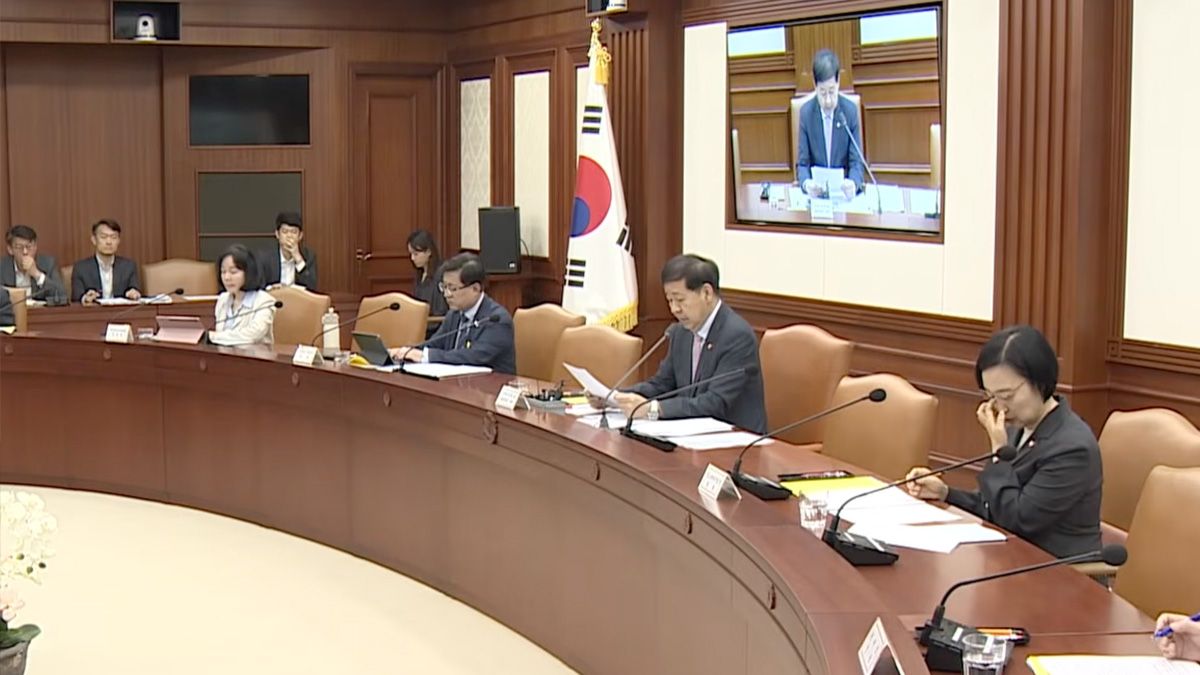
Deputy Prime Minister and Minister of Finance and Economy Koo Yun-cheol made the announcement on Friday, 22 May 2026, at a real estate ministerial meeting held at the Government Complex Seoul.
The meeting was attended by the chairman of the Financial Services Commission (FSC), the first vice minister of the Ministry of Land, Infrastructure and Transport (MoLIT), the second deputy secretary for state affairs, the commissioner of the National Tax Service (NTS), and the commissioner of the National Police Agency (NPA).
Rising prices prompt supply push
Koo opened the session by noting that Seoul apartment sale prices had risen for a second consecutive week. He said sale listings fell sharply in recent weeks and have since stagnated, while rental listings — covering both long-term deposit-based jeonse and monthly-rent arrangements — showed a slight recovery.
"The government will closely monitor price changes and listing flows and will actively respond without relaxing vigilance at any moment for the sake of market stability," Koo said.
The scheme focuses on non-apartment housing such as officetels, villas, and compact studio units. These properties are acquired directly by public institutions, including the Korea Land and Housing Corporation (LH), and made available for lease rather than constructed from the ground up.
Faster supply through existing stock
Koo described the key advantage of the purchased rental model as the speed at which units can reach the market, in contrast to the longer timelines involved in building new apartment developments.
"Non-apartment housing like officetels can be supplied relatively quickly, allowing us to expect visible expansion effects within one to two years," Koo said. "This will help alleviate housing difficulties for young people."
He described non-apartment housing as a critical component of the public housing supply programme, framing the scheme as a way for public institutions to lead the expansion of non-apartment supply.
Of the 90,000 units pledged, 66,000 — representing 73.3 per cent of the total — will be supplied in regulated zones across Seoul and Gyeonggi Province.
Regulated zones in Gyeonggi Province
The Gyeonggi regions designated for allocation include Gwacheon, Gwangmyeong, and Hanam, along with several districts within larger cities. In Seongnam, the Bundang, Sujeong, and Jungwon districts are included. Suwon's Yeongtong, Jangan, and Paldal districts are also covered, alongside Anyang's Dongan district and Yongin's Suji district.
Modular construction and financing support
To support a faster rollout, the government said it will introduce modular construction methods and other techniques designed to shorten building periods. Koo said the move is intended to reduce financial burdens on developers and encourage earlier groundbreaking.
For housing projects that have already obtained planning approvals but have not yet commenced construction, Koo committed to conducting thorough site-by-site management. He said on-site difficulties would be resolved immediately, and that the government would ensure financially viable projects do not encounter funding obstacles that delay their launch.
Crackdown on real estate crimes
Alongside the supply announcement, Koo addressed enforcement action against illegal activity in the property market. He said authorities are targeting tax evasion, price manipulation, and corruption related to reconstruction projects.
Tax investigations have been launched against 127 suspects involved in real estate tax evasion. Separately, more than 2,630 high-end homes valued above 900 million won and owned by corporations are being investigated for potential private use in violation of regulations.
Special crackdowns led by the NPA, targeting price manipulation and reconstruction corruption, have resulted in the investigation of more than 2,200 individuals. As of 19 May, 861 individuals had been referred for prosecution.
"We will not tolerate a single act that disturbs market order," Koo said.
Broader economic uncertainty acknowledged
Earlier the same morning, Koo chaired a separate session convened as the Emergency Economic Headquarters meeting, the Economic Ministers' Meeting, and the National Startup Era Strategy Meeting.
At that session, Koo said economic uncertainty remains elevated, citing the prolonged conflict in the Middle East and continuing volatility in financial markets. He said the government is monitoring the war situation and its effects on supply chains.
Koo added that the government is actively extending fuel tax cuts to ease the burden on households and said the administration intends to accelerate structural reforms to boost potential economic growth and reduce inequality in preparation for a post-conflict environment.