Teo Siong Seng takes leave from SBF roles amid US price-fixing indictment
Singapore Business Federation chairman Teo Siong Seng has taken a leave of absence from his public roles after being named in a US Department of Justice indictment alleging a four-year global conspiracy to fix shipping container prices.
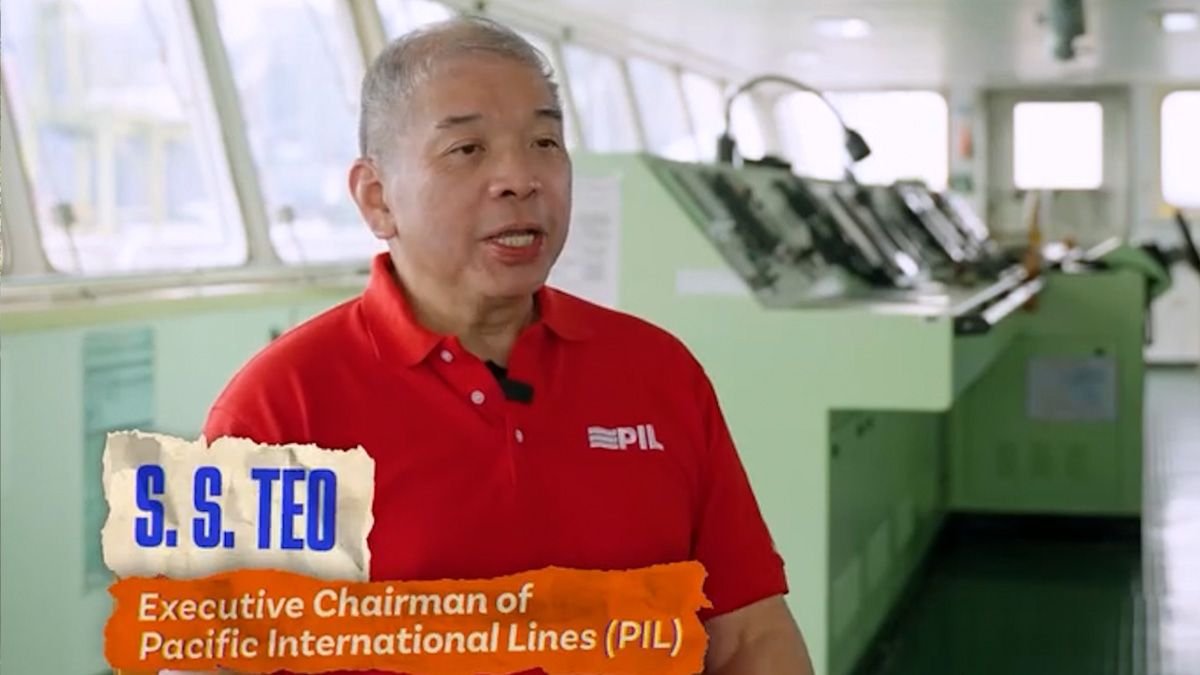

Teo Siong Seng, 71, chairman of the Singapore Business Federation (SBF) and chief executive and chairman of Hong Kong-listed Singamas Container Holdings (Singamas), has taken a leave of absence from his public roles following the unsealing of a US federal indictment naming him as a defendant in a global antitrust conspiracy.
The Ministry of Trade and Industry (MTI) confirmed on 22 May 2026 that Teo had informed it of his decision to step back from his duties at the SBF, the Singapore Economic Resilience Taskforce (SERT), and Enterprise Singapore.
Responding to queries from Channel NewsAsia (CNA), MTI said it had been informed by Teo that his leave of absence was taken to focus his attention on addressing the indictment by the US Department of Justice. MTI added that it was unable to comment further given the ongoing legal process in the United States.
In a statement to CNA, SBF said that Teo's duties as chairman would be assumed by vice-chairman and treasurer Mark Lee. "SBF's operations, engagements and ongoing initiatives will continue as planned, and the federation remains committed to its mission," it said.
Nature of the indictment
A superseding indictment was filed under seal in the US District Court for the Northern District of California on 22 January 2026 and unsealed on 19 May 2026. It names eleven defendants: four companies and seven individuals, with Teo added specifically in the superseding indictment.
The four companies named are China International Marine Containers (Group) Co (CIMC), CXIC Group Containers Co (CXIC), Shanghai Universal Logistics Equipment Co — operating under the Dong Fang International Containers brand — and Singamas.
The alleged conspiracy is said to have spanned more than four years, from as early as November 2019 to at least January 2024. According to the indictment, the four defendant companies and two unnamed co-conspirator companies together manufactured approximately 95 per cent of the world's standard dry containers during this period.
Origins of the alleged scheme
According to court documents, discussions about restricting container output and fixing prices began as early as March 2019.
On or around 14 November 2019, executives from CIMC, Dong Fang, CXIC, and a fourth unnamed company convened at CIMC's headquarters in Shenzhen, China. They allegedly agreed to limit production shifts and hours per day on each container line, and to install 87 surveillance cameras across 49 production lines to monitor compliance.
The group also allegedly agreed not to build any new container manufacturing facilities, and established a financial penalty fund for any company that exceeded its agreed production quota.
Singamas and a sixth unnamed company were identified at that meeting as future participants. Singamas is alleged to have formally joined the arrangement by at least March 2020.
By February 2020, CIMC had circulated to all six alleged co-conspirators a draft contract titled the Shenzhen Moon Gazing Equity Investment Fund, which the indictment states memorialised the output-restriction agreement. The six firms signed the final version at a ceremony in March 2020.
Teo's alleged role
Court documents indicate that approximately one week after the November 2019 meeting, a Singamas executive informed Teo that all six factories would convene in Shanghai on 3 December 2019 to discuss production capacity and the healthy development of the container industry.
Teo was subsequently informed of plans to artificially restrict container production. In December 2019, he allegedly responded by email to a report on the six-company meeting, writing that the company also needed to keep low key.
When a Singamas board member indicated that the discussions appeared to be anti-competitive and suggested deleting the email thread, Teo allegedly replied stating his agreement. He is also alleged to have agreed to delete the relevant email thread.
In July 2022, Teo is alleged to have stated in an internal Singamas meeting that the company preferred a monthly total quota arrangement over daily working-hour restrictions. This approach was reportedly adopted from at least September 2022 through November 2023.
In March 2022, a Singamas executive reviewing a slide presentation Teo had prepared for an investor briefing advised him to omit any reference to market discipline owing to anti-trust concerns. Court documents record Teo's reply as indicating he would make amendments to the slide and revert the following morning.
A document allegedly presented to Teo in November 2023 detailed the conspiracy's total allowable capacity and allowable quota, organised by company and production line.
Price impact and financial gains
The DOJ said that as a result of the alleged conspiracy, standard 20-foot shipping container prices more than doubled, rising from approximately US$1,600 in 2019 to over US$3,500 by 2021.
Standard 40-foot containers rose from approximately US$2,800 to over US$5,900 over the same period, while 40-foot high-cube containers doubled from approximately US$3,000 to over US$6,000.
CIMC's container manufacturing profits rose from approximately US$19.8 million in 2019 to approximately US$1.75 billion in 2021. Singamas saw its net income swing from a loss of approximately US$110 million in 2019 to a profit of approximately US$186.8 million in 2021.
Omeed A. Assefi, acting assistant attorney general of the DOJ Antitrust Division, said the defendants had held hostage the world's supply of ocean shipping containers during the COVID-19 pandemic when supply chains needed it most. He added that the defendants had stolen from everyday Americans who paid more and waited longer for vital goods as a result.
Co-defendants and arrests
Singamas marketing director Vick Nam Hing Ma, 54, was arrested in France on 14 April 2026 while allegedly attempting to board a flight to Hong Kong. Ma is believed to be a resident of Hong Kong. His extradition to the United States is pending, with French authorities and the DOJ's Office of International Affairs assisting in his arrest.
The remaining six executive defendants are at large. They include Mai Boliang, 67, former president and chief executive of CIMC who became its chairman in August 2020, and Huang Tianhua, 62, vice-president of CIMC.
Also named are Wan Yongbo, 47, general manager of CIMC's Operation Management Centre; Li Qianmin, 62, general manager of Dong Fang; and Zhang Yuqiang, 49, chief executive of CXIC. All are believed to be residents of China.
PIL's financial distress and Temasek rescue
Singamas is a subsidiary of Pacific International Lines (PIL), a private Singapore-based shipping company that came close to collapse before a state-linked rescue package stabilised it in 2020.
PIL had accumulated net losses exceeding US$1 billion across 2018 and 2019. It recorded a net loss of US$254 million in 2018, followed by a net loss of US$795 million in 2019, the latter driven largely by one-off impairment charges of US$590 million. Revenues fell from US$4.49 billion in 2018 to US$3.48 billion in 2019.
Facing acute liquidity pressure and mounting vendor overdues, PIL applied to the Singapore courts for restructuring under a Scheme of Arrangement. In a presentation to bondholders in 2020, the company stated that its liquidity situation was extremely strained due to the unstable macroeconomic environment, sizeable vendor overdues, and an unsustainable capital structure.
PIL warned creditors that in the absence of a comprehensive restructuring, the company would likely face liquidation.
Heliconia Capital Management, a wholly owned unit of Temasek Holdings, intervened in two stages. It first extended a S$112 million emergency credit facility to address immediate bankruptcy concerns. It subsequently provided a S$600 million comprehensive refinancing package comprising a mix of debt and equity.
PIL described the package as providing necessary capital to repay critical vendors and recalibrate its capital structure to sustainable levels. Under the restructuring terms, unsecured creditor claims were converted to perpetual securities, while secured debt facilities were resized to match the full value of their collateral.
The Scheme of Arrangement required approval from either a majority in number representing 75 per cent in value of each class of creditor, or at least 75 per cent in value of at least one class of scheme creditors alongside majority support representing at least 75 per cent in value of all scheme creditors.
The rescue arrangement had earlier attracted scrutiny. Prior to the Heliconia package, Temasek had extended loans to PIL through a separate wholly owned vehicle, SeaTown Lionfish Pte Ltd, with PIL pledging its 20.56 per cent shareholding in Singamas as collateral. Those arrangements became public through mandatory disclosures by Singamas to the Hong Kong Stock Exchange, as PIL itself, being a private company, had no obligation to disclose them independently.
Charges and responses
The defendants face charges under Section 1 of the Sherman Antitrust Act. Individual defendants face a maximum penalty of 10 years in prison and a criminal fine of up to US$1 million. Corporate defendants face a maximum fine of US$100 million. Fines may be increased to twice the gain derived from the crime, or twice the loss suffered by victims, if either amount exceeds the statutory maximum.
Singamas said in an exchange filing that it had engaged external legal advisers and that operations remained normal. The company added that neither it nor Teo had been served by the US Justice Department.
Singamas shares fell 14 per cent on 21 May before recovering 3.9 per cent on 22 May.
The case was investigated by the Federal Bureau of Investigation (FBI), the US Postal Service Office of Inspector General, and the US General Services Administration Office of Inspector General.
All defendants are presumed innocent until proven guilty beyond a reasonable doubt.
Teo's public profile
Teo Siong Seng is the fifth son of Chang Yun Chung, the shipping patriarch who founded PIL in 1967. Chang, who died at his Singapore home on 4 September 2020 at the age of 102, was recognised by Forbes as the world's oldest billionaire following the death of David Rockefeller in 2017.
Teo studied at Raffles Institution before graduating from the University of Glasgow with a First Class Honours degree in Naval Architecture and Ocean Engineering. He formally joined PIL in 1979, rose to managing director in October 1992, and was appointed executive chairman in April 2018.
Under his leadership, PIL expanded from intra-Asia routes into China, the Middle East, East Africa, Europe, and North America. By 2000, PIL had an annual turnover of S$1.3 billion, making it Singapore's second-largest shipping conglomerate. He has served as chief executive and chairman of Singamas since 21 January 1997.
Teo served as a Nominated Member of Parliament (NMP) from 2009 to 2014, representing the commerce sector. He chaired the Singapore Chinese Chamber of Commerce and Industry (SCCCI) from 2009 to 2013, introducing merit-based reforms including the removal of clan-based reserved seats from the chamber's election system.
He first served as SBF chairman from 2014 to 2020. He was reappointed on 20 May 2025 following the early departure of his predecessor, and was subsequently named to SERT, which is chaired by Deputy Prime Minister Gan Kim Yong.
He also serves as pro-chancellor of the National University of Singapore (NUS) and as Honorary Consul of Tanzania to Singapore. He holds the Public Service Medal, awarded in 2010, and the Public Service Star, awarded in 2019.
Teo has not been arrested and is believed to be a resident of Singapore. He was featured by the Maritime and Port Authority of Singapore (MPA) in a social media video published in January 2026 on his family's shipping legacy.
US Attorney Craig H. Missakian for the Northern District of California said the DOJ would not tolerate any attempt to manipulate free markets and would continue working with partners at the Antitrust Division to protect the public.