Small aircraft crashes into Beijing's tallest skyscraper
A small aircraft crashed into Beijing's CITIC Tower on Friday evening, striking an upper floor before plummeting to the ground. Chinese authorities have yet to comment, and footage of the incident is being scrubbed from the Chinese internet.
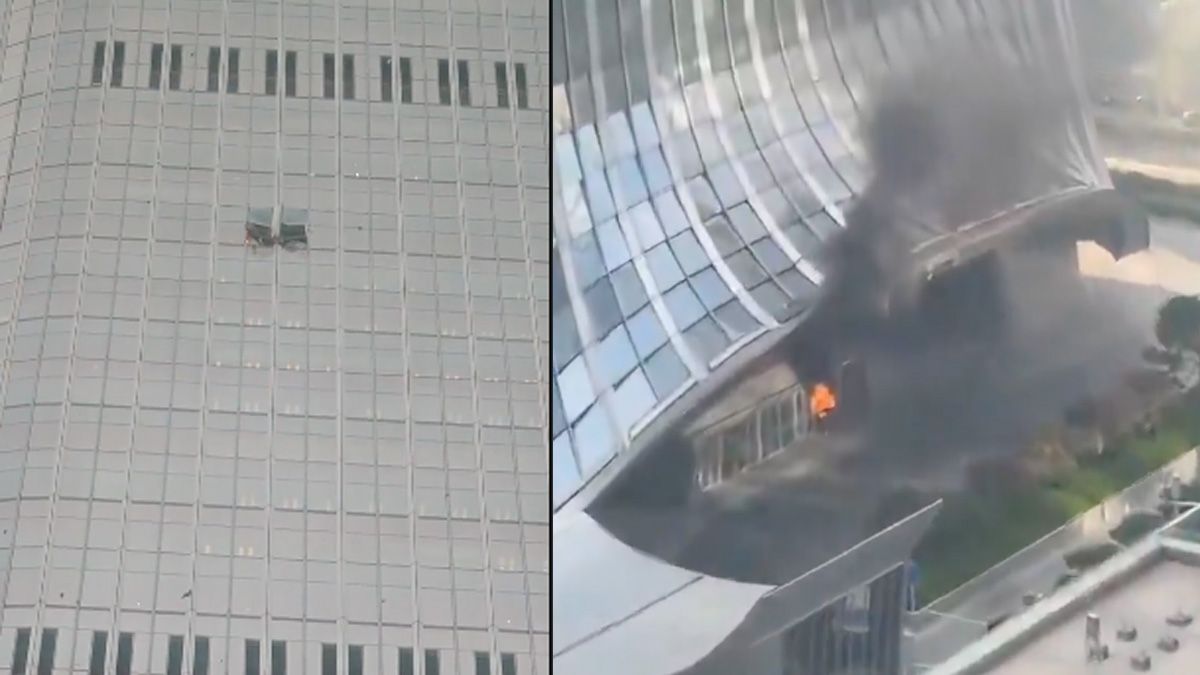

A small aircraft struck the upper floors of Beijing's tallest skyscraper on Friday evening, sending debris raining onto streets below and prompting mass evacuation of the 109-storey CITIC Tower. Chinese authorities have yet to issue any public statement, and information about the incident is being actively censored online.
The crash occurred at around 6pm local time (10:00 GMT), during the evening rush hour, at the CITIC Tower — also known as Zun Tower or "China Zun" — a 528-metre mixed-use skyscraper in Beijing's central business district in Chaoyang, located directly across from the CCTV headquarters. The building, which opened in 2019, is the tenth tallest in the world and can accommodate up to 12,000 office workers.
Witnesses described seeing the small plane strike a high floor before spinning downward and crashing to the ground in front of the tower's entrance.
Aircraft identified
Debris visible in footage bore the registration marking B-12PP, which aviation databases identify as a Chinese-made Shenhe Aurora SA60L — a single-engine, two-seat light sport aircraft approximately 6.9 metres long, 8.6 metres in wingspan, and weighing around 340 kilograms, with a cruising speed of roughly 170 km/h. The aircraft is roughly the size of a large car.
Pilot reportedly identified; deliberate act suspected
York University associate professor Shen Rong-chin, who follows Chinese political affairs, said on Facebook that the pilot has been identified by sources as Liu Junhua, a deputy general manager in the full-discretion and solutions division of CITIC Bank's asset management business centre. She was reportedly receiving emergency medical treatment and her condition was unknown at the time of publication.
Shen cited unverified content from QQ chat logs that had leaked online, which suggested Liu suffered severe financial losses from a margin call and subsequently decided to fly the plane into the building. Shen noted that Liu appeared to have been a trained pilot, as the aircraft struck the floor where her company was located.
These claims have not been independently verified, and Chinese authorities have not confirmed any details about the pilot or the cause of the crash.
Security and political implications
The incident has potentially significant implications for China's military and political establishment. The CITIC Tower stands approximately 7 kilometres from Zhongnanhai, the seat of the Chinese Communist Party leadership.
Professor Shen noted that Xi Jinping has significantly reinforced Beijing's air defences in recent years amid concerns about the security of top leadership — making the breach of airspace over the capital's financial district a potentially serious accountability issue for People's Liberation Army commanders responsible for guarding Beijing's skies.
Widespread censorship
Chinese authorities and state media have not confirmed the incident. Searches on Baidu for "CITIC Tower" and "small aircraft" returned no results. On WeChat, videos shared in group chats were made invisible to other members shortly after being posted. A student at the scene told reporters that posts were being deleted from Chinese platforms as quickly as they appeared.
Officers at the scene were seen preventing bystanders from taking photographs. Two men from the building's property management team told staff gathered near the police cordon to go home. "No one can get in now," one of the men said.
China maintains strict restrictions on airspace, particularly around Beijing's urban core. In April 2026, authorities banned the sale of drones in the capital and required all operators to obtain permits before flying — conditions described as near-impossible to fulfil in practice.
Drone owners were also required to register their devices with police. Despite these controls, commercial flights into Beijing's two airports — Daxing and Capital — do not typically traverse the city centre, making the appearance of a light aircraft over the CBD highly unusual.