Singapore court orders Terraform Labs and founder to pay over US$3m to crypto fraud victims
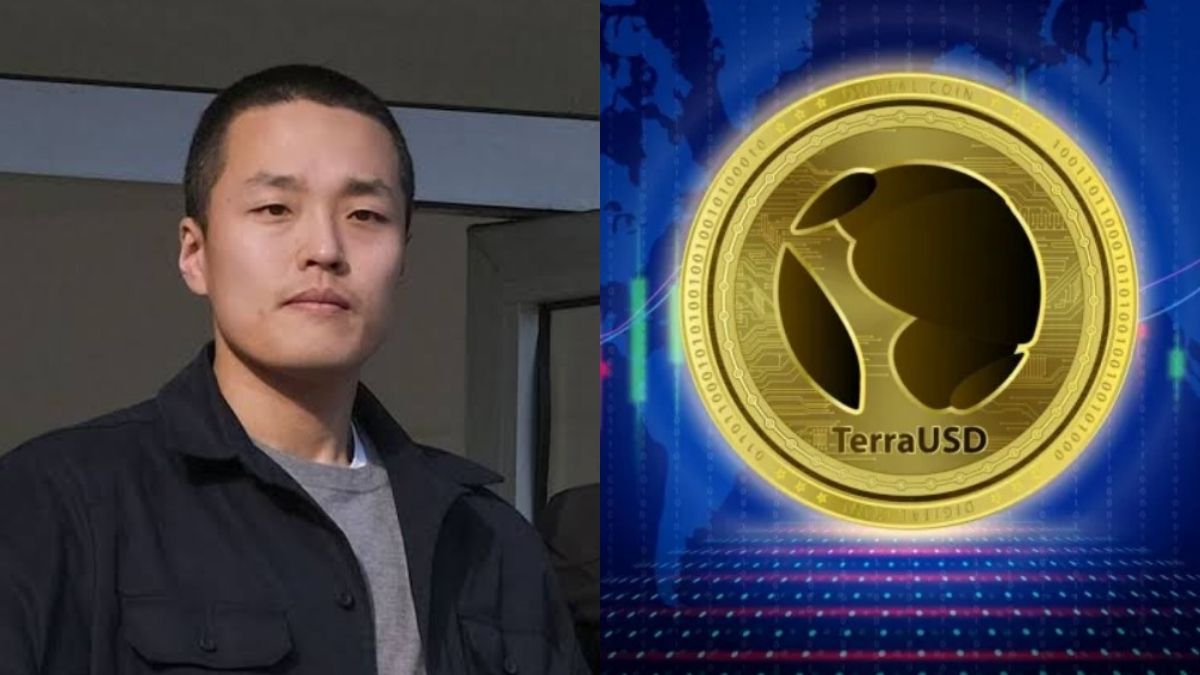
The Singapore International Commercial Court has ordered Terraform Labs, its jailed founder Kwon Do Hyeong, and Luna Foundation Guard to pay damages exceeding US$3 million to 40 investors defrauded through the collapsed TerraUSD stablecoin.
- Court awards over US$3 million to 40 investors in the second tranche of the Terraform crypto fraud case.
- Terraform Labs and Kwon Do Hyeong had already conceded five fraudulent misrepresentations about TerraUSD before trial.
- Kwon, currently serving 15 years in a US federal prison, did not appear or instruct lawyers for the Singapore hearing.

The Singapore International Commercial Court (SICC) has awarded damages of more than US$3 million to 40 investors who were defrauded through Terraform Labs' TerraUSD (UST) stablecoin, which collapsed in May 2022.
The ruling, handed down on 29 June 2026 by International Judge Anselmo Reyes, concludes the second tranche of a representative action involving 275 claimants.
The defendants are Terraform Labs Pte Ltd (Terraform), its co-founder Kwon Do Hyeong, and Luna Foundation Guard Ltd (LFG).
Background
UST was an algorithmic stablecoin designed to maintain a one-to-one peg with the US dollar.
At its peak in spring 2022, the total market value of UST and Terraform's native token LUNA exceeded US$50 billion.
The stablecoin collapsed in May 2022, resulting in losses of more than US$40 billion for investors worldwide.
Kwon Do Hyeong was arrested in Montenegro in March 2023 whilst attempting to travel on a fraudulent passport.
He was extradited to the United States on 31 December 2024 and pleaded guilty to wire fraud and conspiracy to commit securities fraud in August 2025.
On 11 December 2025, a US federal court sentenced him to 15 years in prison and ordered the forfeiture of more than US$19 million.
The Singapore civil proceedings run separately from the US criminal case.
Kwon Do Hyeong did not appear and did not instruct lawyers to represent him at the second tranche hearing.
Fraudulent misrepresentations admitted
Before the first tranche trial in May 2025, the defendants conceded that five representations about UST were false and had been made fraudulently.
These included claims that UST was stable by design, pegged to the US dollar, and that its algorithm would maintain the peg regardless of market conditions or size.
They also included representations that holders could always exchange 1 UST for US$1 worth of LUNA, that the Anchor Protocol was a principal-guaranteed savings product, and that LFG had raised US$1 billion to defend the peg.
Because the defendants admitted fraud, each claimant needed only to show that they had read one or more of these representations, understood them as pleaded, and purchased UST with those representations in mind.
Damages awarded
The court assessed damages on the reliance measure, seeking to restore each claimant to the financial position they would have occupied had the misrepresentations not been made.
A default cut-off time of 12.01am UTC on 12 May 2022 was applied in most cases. This is the point at which a reasonable investor, having read the founder's tweets of 11 May 2022, would have appreciated that the representations could no longer be true.
Awards ranged from US$11,337.57 to US$471,044.15. The largest award went to a Singapore-based investor who sold almost all his holdings on 11 May 2022, before the default cut-off.
Three claimants' awards — those of Lam Chung Fan, Thor Robert Kiessling, and Gary Koh Boon Thong — remain to be determined, with parties directed to agree on figures or submit competing calculations within 14 days.
The court rejected aggravated damages claims by all six claimants who sought them, finding that financial loss and the ordinary distress accompanying it fell short of the required threshold.
Extended and adjusted cut-off times
The default cut-off was adjusted for eight claimants based on individual circumstances. Three had their cut-off dates extended because they were physically prevented from selling.
Bernhard Alexander Friedrich Frey, who attended a silent meditation retreat in Belgium from 9 to 16 May 2022 without access to his phone, hardware wallets, or the internet, was unable to discover the collapse in time. The court extended his cut-off to 16 May 2022, resulting in an award of US$343,582.57.
Another claimant whose UST remained locked in a decentralised finance platform due to a technical bug received an extended cut-off tied to the date he was finally able to withdraw his holdings.
Two claimants — Lim Xianlong Kevin and Tan E-Wen Timothy — had their cut-offs brought forward to 11 May 2022. The court found they had sold substantially all of their UST on that date, indicating that reliance on the representations had ended.
Fraud cannot be contracted away
The court rejected a recurring defence argument that disclaimer clauses in the Anchor Protocol's Terms of Service negated the claimants' reliance. The defendants relied on clauses stating that terms such as "yield" and "invest" should not be interpreted literally, and that users acknowledged the risk of loss.
Judge Reyes held that a party cannot use contractual disclaimer language to exclude liability for its own fraudulent misrepresentations. To permit such boilerplate terms to shield the defendants "would be inimical to notions of justice."
The court also rejected the defendants' attempt to apply an objective standard to the reliance inquiry. Reliance is assessed subjectively — the question being whether the representations in fact induced each claimant to purchase, not whether a reasonable person would have done so.
The May 2021 de-peg comparison
Several claimants argued that their continued holding of UST beyond 12 May 2022 was reasonable because they expected a recovery similar to a brief de-peg in May 2021. The court rejected this argument.
In May 2021, UST fell to approximately US$0.92 and recovered within days. In May 2022, it hit daily lows of US$0.7934, US$0.6841, and US$0.2998 on three consecutive days, with no recovery following. The court found the two episodes "fundamentally different" in scale and nature.
The US criminal proceedings revealed that the May 2021 recovery was itself deceptive. According to US federal prosecutors, when the Terra Protocol alone failed to restore the peg in May 2021, Kwon Do Hyeong arranged for a high-frequency trading firm to purchase large amounts of UST artificially. The peg was restored through secret market manipulation, not the algorithm's own mechanism.
Guidance on witness statements and AI
The judgment provides guidance on the preparation of witness statements in mass claims. Many claimants had submitted statements with near-identical wording, raising concerns about independent recollection.
The court admitted the evidence after finding that solicitors had used an open-ended questionnaire and that each claimant affirmed the contents of their statement under cross-examination.
Judge Reyes warned, however, that this approach "should not be repeated in future tranches."
The judgment also addressed the use of generative artificial intelligence in preparing court documents.
While AI may assist with structure and form, "the evidence and words must remain that of the witness," the court stated.
Broader proceedings
The remaining 235 claimants not heard in this tranche will proceed in further hearings.
The Court of Appeal had previously revised the per-token cut-off price from US$0.8011 to US$0.60485, a change applicable to all represented claimants.
Pre-judgment interest and costs were reserved to a later date.