S$55 million GCB seized as Singapore files fresh charges in Nvidia chip movement investigation
Singapore authorities have seized a Good Class Bungalow worth about S$55 million and around S$1 million in funds while bringing fresh fraud and money laundering charges in an investigation linked to the movement of Nvidia AI servers in alleged contravention of United States export controls.
- Singapore police seized a S$55 million Good Class Bungalow and about S$1 million during an expanded fraud investigation.
- Four individuals and four companies face new fraud and money laundering charges over alleged false representations to server suppliers.
- The investigation comes amid wider international scrutiny over alleged attempts to divert Nvidia AI technology subject to United States export controls.

Singapore authorities have seized a Good Class Bungalow (GCB) valued at approximately S$55 million and around S$1 million in bank funds as investigations into an alleged fraud conspiracy linked to the movement of Nvidia chips continue to expand.
The Singapore Police Force (SPF) said on 1 July 2026 that the case has been linked to the movement of Nvidia chips "in contravention of US export controls".
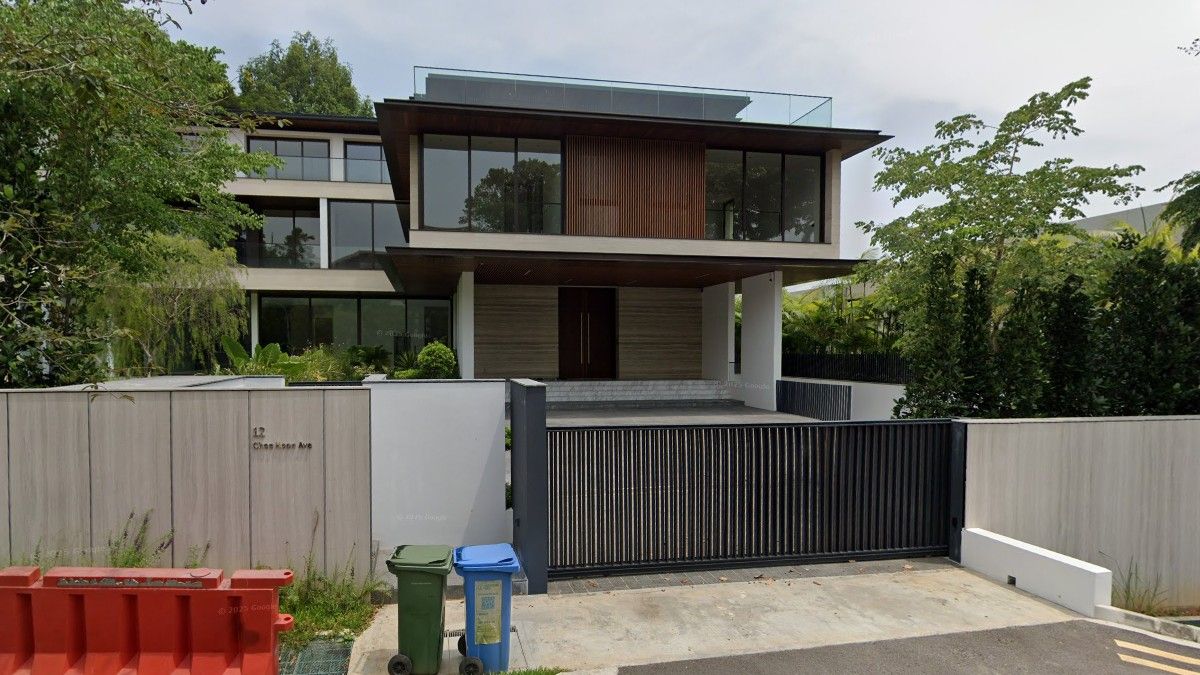
As part of the investigation, police issued a prohibition of disposal order over a GCB reportedly located at 12 Chee Hoon Avenue and seized funds held in bank accounts.
The latest developments have resulted in additional fraud and money laundering charges against four individuals, while four corporate entities will also face prosecution.
Fresh charges broaden investigation
The case initially involved Aaron Woon Guo Jie, Alan Wei Zhaolun and Chinese national Li Ming, who were charged on 27 February 2025 with fraud by false representation relating to purchases of servers.
Woon and Wei were originally charged with conspiring to defraud server suppliers Dell and Super Micro in transactions involving approximately US$250 million.
Wei also faced two money laundering charges, while Woon was charged with one.
According to investigators, Li falsely represented that a company under his control, Luxuriate Your Life, would hold and lease servers purchased from Super Micro to other companies.
Prosecutors previously told the court the alleged offences involved around US$140 million.
Li had also been charged with abetting another person to secure unauthorised access to a bank account belonging to another company.
The three were among nine people arrested during coordinated raids conducted by the SPF and Singapore Customs in February 2025 after media reports alleged intermediaries in Singapore had facilitated the movement of Nvidia chips to China while bypassing United States export controls.
Companies also face prosecution
Police said Jenny Lim was charged on 2 April 2026 with participating in a criminal conspiracy to commit fraud by false representation.
She is accused of conspiring with Woon and Wei to falsely represent to Dell that servers would be supplied to Aperia International despite the company allegedly not being the end user.
At the time, Wei, Lim and Woon were key officers of Aperia International, A-Speed Infotech and Aperia Cloud Services, collectively known as the Aperia Group.
The SPF said the three companies, together with Luxuriate Your Life, will also face fraud charges, marking "the first instance of corporate entities being prosecuted in relation to these investigations."
The latest charges allege Wei, Lim and Woon conspired between November 2023 and February 2025 to falsely represent to Dell, Super Micro Computer and Asus that companies within the Aperia Group would be the end users of the servers being purchased.
Lim and Woon each face seven new charges, while Wei is scheduled to face seven additional charges when he appears in court on 6 July 2026.
Because the alleged representations were made in their capacities as company officers, the four companies will collectively face eight fraud charges on the same date.
Money laundering allegations
Lim and Woon each face fresh money laundering charges for allegedly acquiring approximately S$1.2 million in their personal bank accounts, with prosecutors alleging that about S$1 million represented benefits derived from criminal conduct.
Wei will face an additional money laundering charge alleging he converted property worth approximately S$55 million, representing in part criminal benefits of around S$38 million through the purchase of the GCB.
Li also faces a further fraud charge relating to communications with Super Micro in November 2023, in which he allegedly falsely represented himself as an employee of Luxuriate Your Life.
He has additionally been charged with knowingly carrying on the company's business for a fraudulent purpose and with abetting the director of another company to omit exercising reasonable diligence in carrying out the director's duties.
If convicted, the four accused face penalties ranging from fines to lengthy imprisonment depending on the offences. Fraud carries a maximum penalty of 20 years' imprisonment, a fine, or both. The corporate entities face fines for each fraud charge if convicted.
International scrutiny over AI exports
The Singapore investigation comes as the United States continues tightening export controls designed to prevent advanced artificial intelligence technology from reaching China over concerns the hardware could support military modernisation.
The US Commerce Department has reportedly been examining whether Chinese artificial intelligence company DeepSeek accessed restricted United States technology.
In March 2026, the US Department of Justice unsealed criminal charges against three individuals linked to Super Micro Computer, alleging they smuggled at least US$2.5 billion worth of United States-origin AI technology, including restricted Nvidia chips, to China.
Federal prosecutors alleged former Super Micro executive Yih-Shyan "Wally" Liaw, Taiwan office general manager Ruei-Tsang "Steven" Chang and intermediary Ting-Wei "Willy" Sun used shell companies and forged documentation to disguise shipments of Nvidia-powered servers destined for customers in China.
Prosecutors alleged the servers contained restricted Hopper and Blackwell AI chips subject to United States export controls.
Separately, on 29 June, Taiwanese prosecutors expanded a parallel investigation into the alleged illegal export of Super Micro servers containing restricted Nvidia AI chips to China.
Authorities conducted additional searches at company offices, affiliated businesses and suspects' homes, including Super Micro's Taiwan office, as investigators examined alleged document forgery and breach of trust offences connected to the exports.
Long-standing concerns over chip diversion
Concerns about the effectiveness of export controls have persisted since late 2024, when social media posts from China appeared to show businesses openly acquiring restricted Nvidia AI chips despite sanctions.
One Beijing-based entrepreneur, Su Di, publicly displayed shipments of Nvidia H100 and H200 processors on Chinese social media and described the chips as critical to China's expanding AI industry.
According to the publicly available posts, Su acknowledged that acquiring the chips breached United States export restrictions but claimed large shipments had continued to arrive regularly.
Su also alleged that contacts involved in the trade had operated on a large scale for approximately two years and had consistently found ways to bypass sanctions.