Aperia Group CEO charged with laundering S$38 million linked to bungalow purchase
Aperia Group chief executive Alan Wei Zhaolun was charged with laundering S$38 million used to buy a Good Class Bungalow and acquiring S$3.2 million in alleged criminal proceeds. He denied all 11 charges, while the court increased his bail to S$1.25 million.
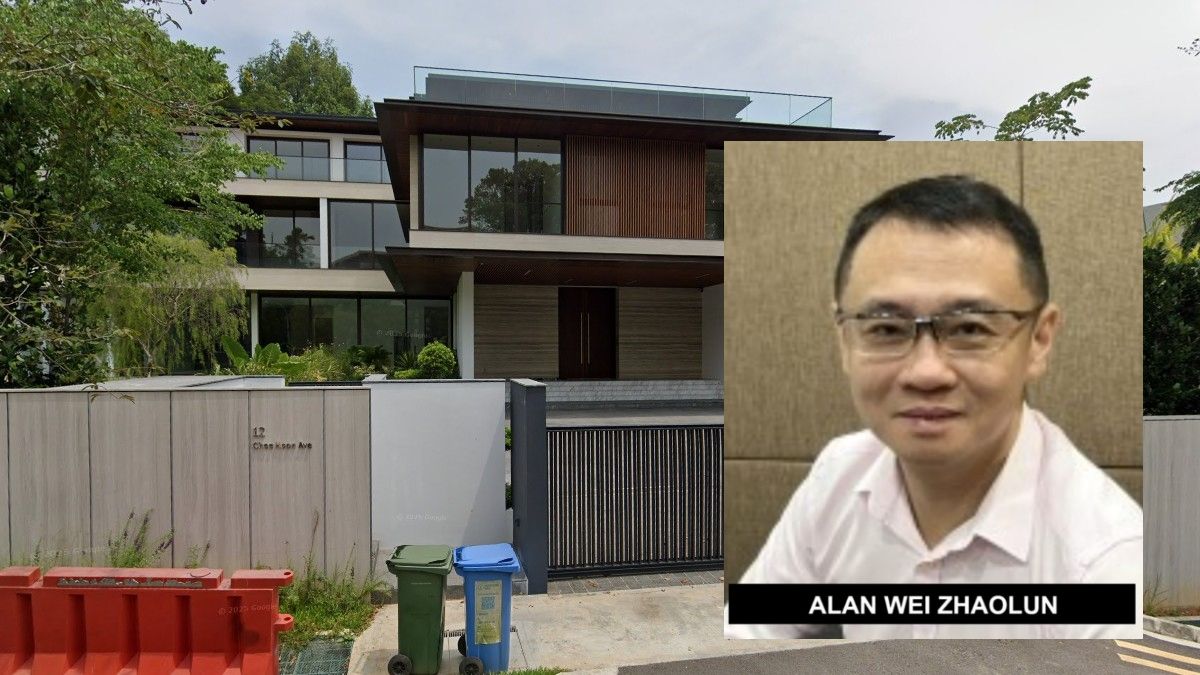
- Aperia Group CEO Alan Wei Zhaolun faces 11 charges after two new money laundering-related charges were filed.
- Prosecutors allege S$38 million in criminal proceeds was used to purchase a Good Class Bungalow.
- Wei denied all allegations, while the court increased his bail to S$1.25 million.

SINGAPORE: Aperia Group chief executive Alan Wei Zhaolun was charged on Monday with laundering S$38 million allegedly used to purchase a Good Class Bungalow and acquiring S$3.2 million in alleged criminal proceeds, bringing the total number of charges against him to 11.
Wei, 50, indicated through his lawyers that he would contest all charges, describing them as "misconceived".
Most of the charges relate to an alleged conspiracy to commit fraud connected with the purchase of computer servers that allegedly contained Nvidia chips moved in contravention of United States export controls.
The case emerged following United States investigations into whether Chinese start-up DeepSeek circumvented restrictions on advanced Nvidia chips by purchasing them through third parties in countries including Singapore.
Fresh money laundering charges
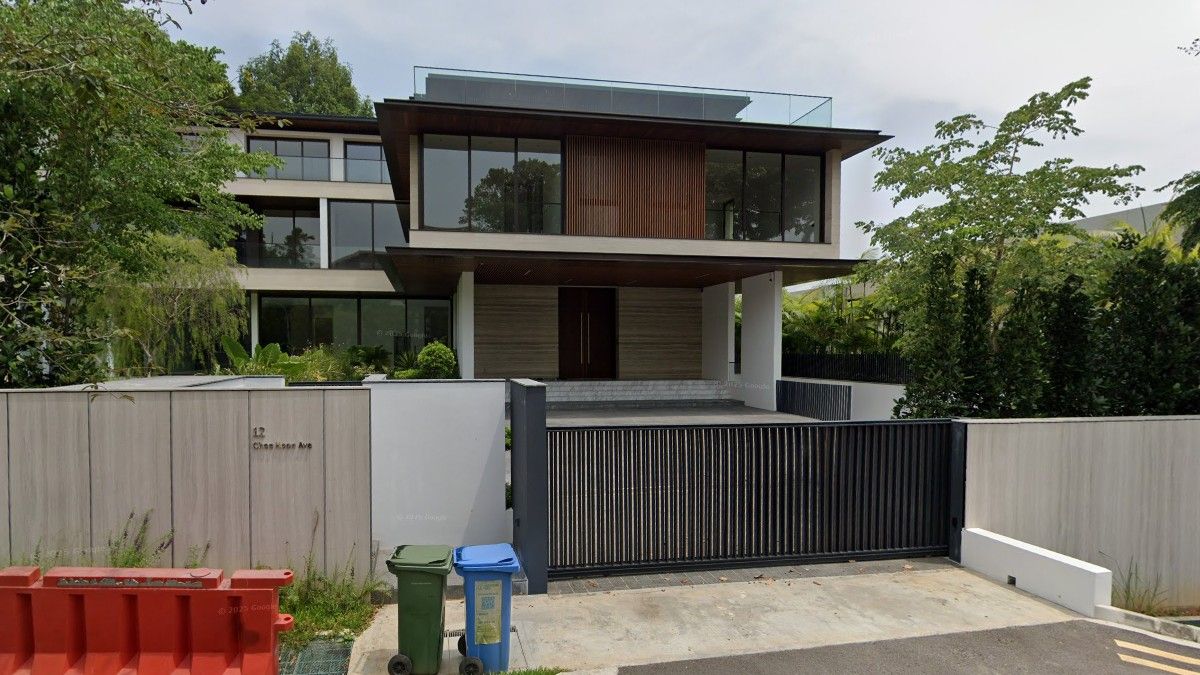
According to the new charges tendered in court on 6 July 2026, Wei allegedly purchased a bungalow at 12 Chee Hoon Avenue between July and October 2024 for S$55 million.
Prosecutors alleged that approximately S$38 million of the purchase price represented benefits derived from criminal conduct.
Police said last week they had issued a prohibition of disposal order against the Good Class Bungalow, preventing it from being sold or transferred while the order remains in force.
Wei was also charged with acquiring funds totalling S$5.8 million in his bank accounts during two periods — between 25 July and 7 August 2024, and on 3 October 2024.
Of that amount, approximately S$3.2 million allegedly represented benefits from criminal conduct.
Fraud allegations expanded
The latest charges increase Wei's total number of charges to 11.
His alleged co-conspirators are Aperia Group chief financial officer Jenny Lim, 51, and the group's head of sales Aaron Woon Guo Jie, 41.
The trio are accused of conspiring to commit fraud by making false representations in end-use and end-user certification forms submitted to representatives of technology companies, including the Singapore branch of Dell Global B V, Super Micro Computer Inc. Taiwan and Asus Global.
Prosecutors alleged the forms falsely stated that the end-users of servers purchased from those companies were entities within Aperia Group.
The three Aperia companies involved — A-Speed Infotech, Aperia International and Aperia Cloud Services (II) — have also been charged with related fraud offences.
Two of Wei's original charges were amended to allege that the conspiracy involved Lim in addition to Wei and Woon.
Defence maintains charges are "misconceived"
Wei is represented by lawyers from WongPartnership, including Melanie Ho, Tang Shangwei, Rachel Ong and Neo Yi Ling.
Ho told the court that Wei denied all wrongdoing.
"The charges are 'misconceived'," she said.
She added that Wei and the three Aperia companies had cooperated with investigators and that the companies were "running to the best of their ability despite these turbulent times".
Bail increased
The prosecution sought to increase Wei's bail from S$800,000 to S$1.25 million following the new charges.
The defence opposed the application, arguing that the additional charges were not unexpected because prosecutors had previously indicated they intended to bring them.
The judge granted the prosecution's application and increased bail to S$1.25 million.
The cases involving the three Aperia executives and the three companies were adjourned for pre-trial conferences.
Company says it is cooperating
Following the hearing, an Aperia Group spokesperson said the companies were fully cooperating with authorities.
"We are fully cooperating with the authorities so that the regulatory flux is taken into consideration when viewing the alleged offences," the spokesperson said.
"The charges relate to commercial transactions involving suppliers and customers from the USA and elsewhere, which required multi-jurisdictional regulatory compliance."
"It is unfortunate that despite their best efforts, the companies face these allegations of wrongdoing, which they deny."
The spokesperson added that the group would seek to minimise disruption to its operations and that business would continue as usual.
If convicted of converting benefits from criminal conduct, Wei could face up to 10 years' imprisonment, a fine of up to S$500,000, or both.
Those convicted of conspiracy to commit fraud by false representation may face up to 20 years' imprisonment and a fine.
The three Aperia companies also face financial penalties if convicted.
International scrutiny over AI exports
The US Commerce Department has reportedly been examining whether Chinese artificial intelligence company DeepSeek accessed restricted United States technology.
In March 2026, the US Department of Justice unsealed criminal charges against three individuals linked to Super Micro Computer, alleging they smuggled at least US$2.5 billion worth of United States-origin AI technology, including restricted Nvidia chips, to China.
Federal prosecutors alleged former Super Micro executive Yih-Shyan "Wally" Liaw, Taiwan office general manager Ruei-Tsang "Steven" Chang and intermediary Ting-Wei "Willy" Sun used shell companies and forged documentation to disguise shipments of Nvidia-powered servers destined for customers in China.
Prosecutors alleged the servers contained restricted Hopper and Blackwell AI chips subject to United States export controls.
Separately, on 29 June, Taiwanese prosecutors expanded a parallel investigation into the alleged illegal export of Super Micro servers containing restricted Nvidia AI chips to China.
Authorities conducted additional searches at company offices, affiliated businesses and suspects' homes, including Super Micro's Taiwan office, as investigators examined alleged document forgery and breach of trust offences connected to the exports.