MOH to strengthen TB screening communications after Bedok exercise, Tan Kiat How tells Parliament
The Ministry of Health will improve public communications for future tuberculosis screening exercises following concerns raised over the Bedok operation, Senior Minister of State for Health Tan Kiat How said, while defending the precautionary exercise as part of proactive disease surveillance.
- MOH will improve public communications during future precautionary TB screening exercises.
- Tan Kiat How defended the Bedok operation as an early intervention enabled by whole genome sequencing.
- Lessons from the exercise will be incorporated into the Communicable Diseases Agency's standard operating procedures.

Senior Minister of State for Health Tan Kiat How said the Ministry of Health (MOH) will strengthen public communications during future tuberculosis (TB) screening exercises after concerns were raised over the recent Bedok operation, while maintaining that such precautionary screenings remain an important part of Singapore's proactive disease surveillance strategy.
Speaking in Parliament on 7 July 2026, Tan responded to supplementary questions from Pritam Singh, MP for Aljunied GRC, who suggested that future screening exercises could be conducted over a longer period and adopt different arrangements for hawkers and residents to reduce public anxiety.
Tan said the Communicable Diseases Agency (CDA) would incorporate lessons from the Bedok exercise into its standard operating procedures while continuing to carry out precautionary screenings whenever necessary.
Proactive surveillance approach
Tan said the Bedok screenings conducted in May formed part of a more proactive surveillance effort aimed at minimising outbreaks of infectious diseases.
He said the CDA would continue conducting precautionary screenings whenever public health circumstances required early intervention.
"We do so when we believe there's a case where we can take early action, intervene early to prevent future outbreaks," Tan said.
He added that waiting until an outbreak had already occurred would result in significantly higher costs for both individuals and the wider community.
"The cost of intervening only when future outbreaks happen will be much higher, especially for individuals and the community," he said.
Bedok screening exercise
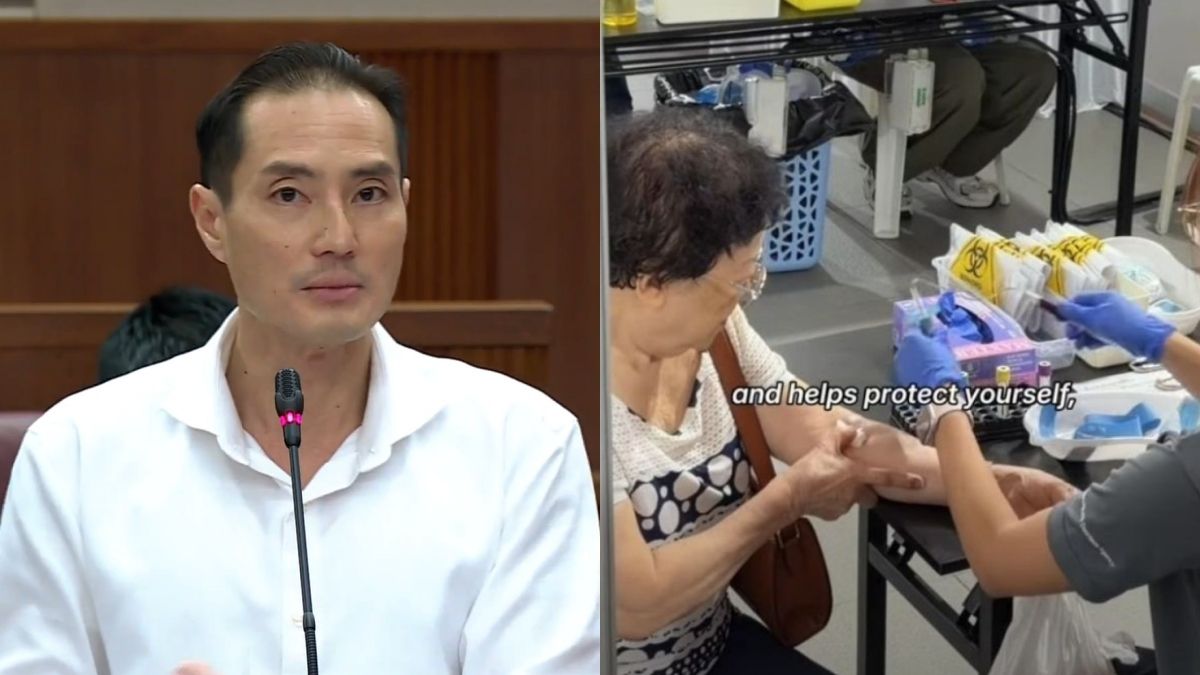
In May, the CDA conducted mandatory TB screening for about 700 tenants and employees across three locations in Bedok after identifying three clusters involving 13 genetically similar TB cases.
Voluntary screening was also offered to members of the public who had visited the affected locations.
Altogether, 3,525 people underwent screening, with one active TB case detected.
The operation followed advances in whole genome sequencing, which enabled health authorities to identify that TB bacteria from 13 patients diagnosed between January 2023 and February 2026 were genetically linked.
Tan explained that although the cases had emerged over a three-year period, recent developments in whole genome sequencing capabilities allowed health authorities to establish the genetic connection between them.
He said none of the 13 individuals were hawkers, merchants or people working at Heartbeat@Bedok or Bedok Town Centre.
Instead, they had frequented the locations, including visiting for meals or to use public facilities.
"As a matter of precaution, we wanted to make sure we test everyone there, those who are working there and those who frequent the facilities often to really make sure that everyone is safe," he said.
Calls for longer screening period
During the parliamentary exchange, Singh questioned whether the relatively short screening period had unintentionally conveyed a sense of urgency that exceeded the actual public health situation.
He noted that the original notice issued by the CDA on 30 April stated that the mandatory screening exercise would take place over several days in early May, creating what he described as an impression of "urgency and criticality".
Singh pointed out that the 13 genetically linked cases had been identified over a period spanning more than three years, from January 2023 to February 2026.
He suggested that future screening exercises could be conducted over a longer timeframe and that separate screening arrangements could be considered for hawkers, businesses and residents who had merely passed through the affected areas.
According to Singh, such an approach could reduce anxiety among hawkers and other affected groups while providing a more accurate reflection of the level of public health risk.
Improving public communication
Responding to the concerns, Tan acknowledged there were valuable lessons from the Bedok exercise, particularly in explaining the rationale behind precautionary screening measures.
He said health authorities had sought to explain the scientific basis for the operation, including through his own public communications, but recognised that more could be done to reassure the public.
"There are many learning points of how we could have explained it better," he said.
"We take those learning to heart and CDA will see how better to improve the public communications to assure people."
Tan said those lessons would be formally incorporated into future operational planning.
"We'll make sure that those lessons will be incorporated in our SOPs, standard operating procedures, and our approach next time," he said.
He also thanked Singh for visiting Bedok during the screening exercise to speak with merchants, hawkers and residents affected by the operation.
Current TB situation
According to the CDA's weekly infectious disease bulletin, Singapore recorded 417 reported TB cases in 2026 as at the end of June.
In 2024, there were 1,156 new active TB cases among Singapore residents, representing an incidence rate of 27.6 cases per 100,000 residents.
Tan said precautionary screening would continue to be an important tool in Singapore's public health strategy, particularly as advances in genomic technology enable authorities to identify potential disease transmission links earlier and intervene before larger outbreaks develop.