WP's Kenneth Tiong calls 2016 NOL sale a strategic mistake, urges revival of Singapore shipping capability
Workers' Party MP Kenneth Tiong has criticised the 2016 sale of Neptune Orient Lines as a strategic mistake, urging the Government to rebuild Singapore's sovereign shipping capability. He argued the move weakened maritime resilience, seafarer development and crisis preparedness.
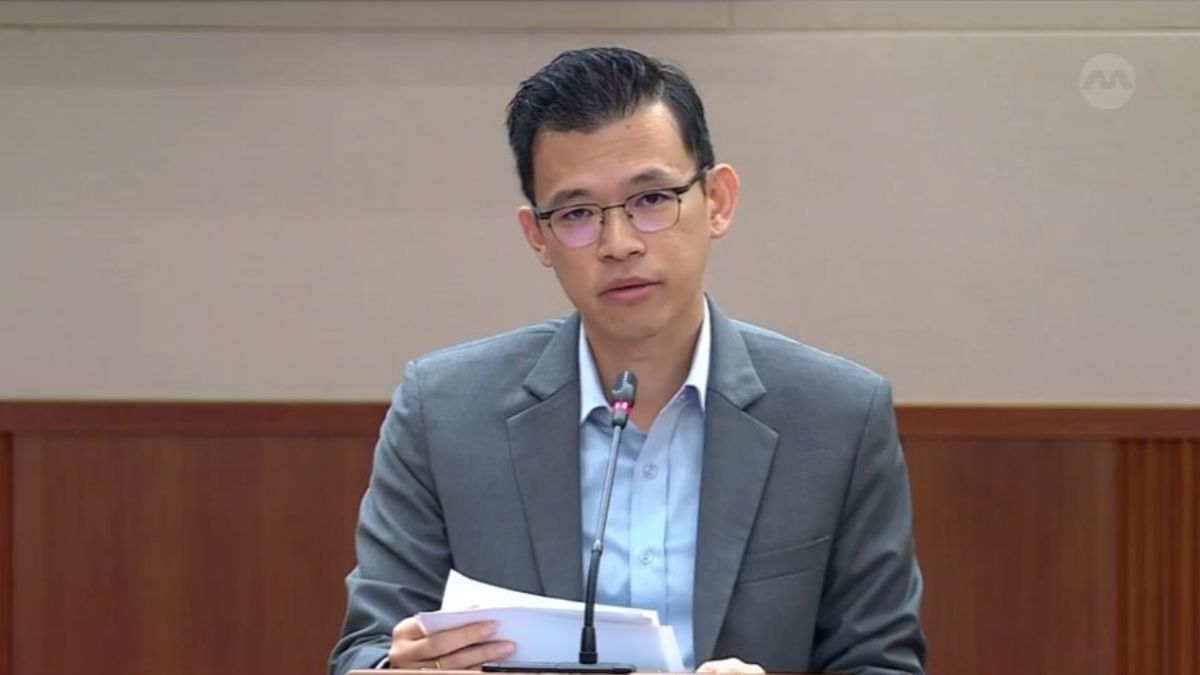
- Kenneth Tiong said the sale of NOL in 2016 was a strategic mistake that undermined Singapore's maritime security.
- He argued Singapore needs a national shipping carrier to develop local maritime talent and safeguard supply chains.
- Tiong urged the Government to rebuild sovereign shipping capability through long-term state-backed investment.

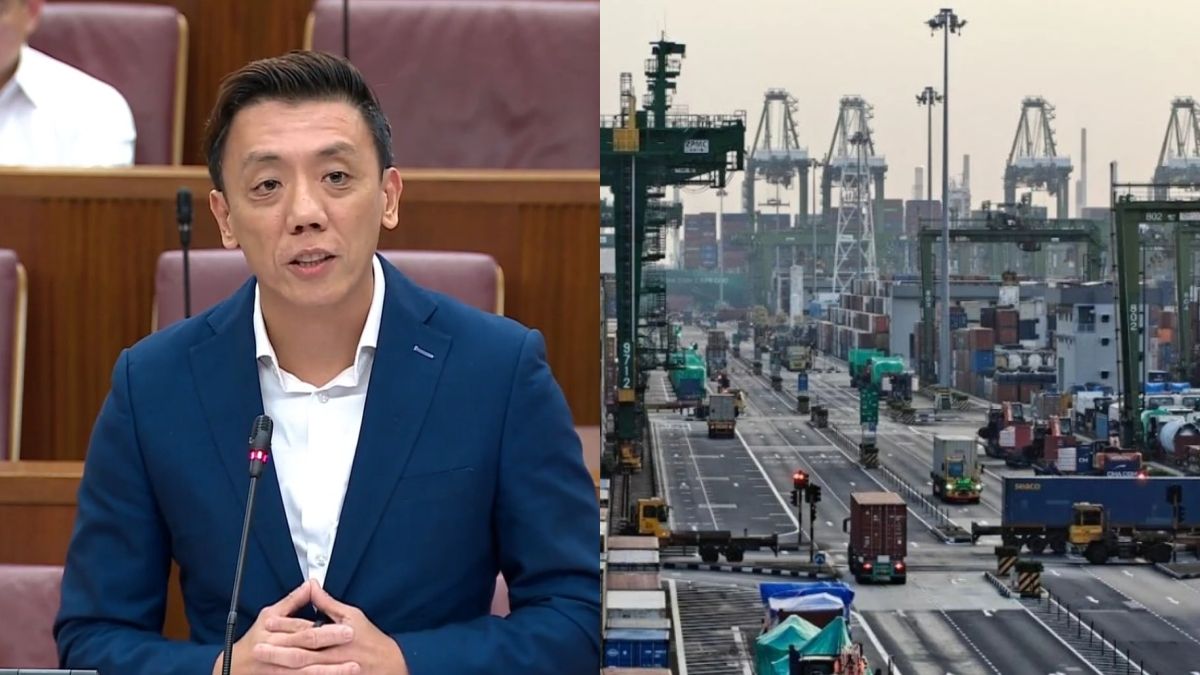
Workers' Party MP Kenneth Tiong has called the 2016 sale of Neptune Orient Lines (NOL) a "big failure of strategic judgment", arguing the Government should not have allowed Temasek to divest Singapore's national shipping carrier because it weakened the country's long-term maritime resilience.
Speaking during a parliamentary debate on reinforcing Singapore's position as a global transport hub on 7 July 2026, Tiong said the decision eliminated a critical national capability and deprived Singapore of an essential training ground for future generations of seafarers.
"The Government should not have allowed Temasek to sell off NOL," he said, describing the disposal as a strategic rather than purely commercial decision.
Sale ended a sovereign capability
Tiong said Singapore's status as one of the world's leading maritime nations meant shipping should be viewed as a strategic national capability rather than a commercial asset.
He noted that Singapore remains the world's busiest container transhipment hub and largest bunkering port, while more than 90 per cent of its food imports arrive by sea. He added that the Strait of Malacca carries roughly a quarter of global seaborne trade and almost half of the world's seaborne crude oil.
"A nation this dependent on the sea cannot safely treat the capability to move on it as a commodity to be rented," he said.
According to Tiong, the 2016 sale of NOL to France's CMA CGM marked the culmination of a gradual dismantling of Singapore's national shipping group, following earlier divestments of its tanker business, headquarters and logistics arm.
"In so doing, we exited an entire strategic domain," he said.
Different treatment from Singapore Airlines
Tiong questioned why the Government regarded Singapore Airlines (SIA) as a strategic national asset while taking a different approach towards NOL.
He pointed out that Temasek committed up to S$15 billion to support SIA during the COVID-19 pandemic, but allowed NOL to be sold.
"We treat the airline SIA as strategic and rescue it, but we treat the sea carrier NOL as a commodity and sell it," he said.
He added that although Temasek later acquired a majority stake in Pacific International Lines (PIL), the investment was managed primarily for commercial returns rather than national strategic purposes.
"So Singapore stands as a major maritime hub with no national line of its own," he said.
National carrier vital for maritime talent
Tiong argued that a national shipping line serves as more than a transport operator because it provides the practical sea-going experience needed to develop Singapore's maritime workforce.
He said seafarers progress from cadet to officer, chief mate and eventually master mariner through years of documented sea service, with that experience forming the foundation for later appointments as harbour pilots, surveyors and Port Masters.
"No one is made a master mariner by a scholarship," he said.
He warned that Singapore was already facing a shortage of local maritime professionals, noting that fewer than one in 12 officers serving on Singapore-flagged vessels are Singaporeans.
Without a domestic fleet offering sufficient sea-going opportunities, local cadets increasingly have to rely on foreign shipping companies to complete mandatory sea service.
"When Temasek sold NOL, it crystallised a financial gain... and sold the training ground the whole ladder stands on," Tiong said.
He argued that rebuilding maritime expertise takes decades, unlike ships, which can be purchased or chartered relatively quickly.
"Ships can be bought or chartered within a year. A generation of sea-experienced Singaporeans takes a generation to grow."
Foreign dependence could become a weakness
Tiong also argued that a national shipping line provides strategic capacity during international crises.
He cited disruptions during the COVID-19 pandemic and the Red Sea shipping crisis, when container capacity tightened sharply and freight rates surged.
"In such a crunch, the market does not serve all comers equally," he said, arguing that countries with their own national carriers were better positioned to prioritise domestic businesses during periods of constrained shipping capacity.
"A country that owns no capacity in a capacity crunch is a beggar for allocation."
He disagreed with the Government's earlier position that diversified shipping networks and Singapore's status as a trusted global hub were sufficient to secure supply chains.
According to Tiong, there is a distinction between operating a successful port and controlling shipping capacity.
"The carrier picks its ports; the port cannot pick its carriers," he said.
Proposal to rebuild shipping capability
Tiong urged the Government to begin rebuilding Singapore's sovereign shipping capability rather than accepting continued dependence on foreign operators.
He suggested that the Government could leverage Temasek-owned Pacific International Lines as the foundation for a renewed national shipping strategy.
Rather than operating solely as a commercial enterprise, he proposed giving PIL a national mandate that includes training Singaporean officers, maintaining reserved shipping capacity during crises and expanding strategically over time.
"What is missing is a purpose," he said.
He acknowledged that rebuilding a national carrier would require substantial public investment.
"Scale in the mainline trades is brutal and capital hungry," he said, adding that the effort would need to be state-backed, phased and pursued with strategic patience.
He cited South Korea's rebuilding of HMM following the collapse of Hanjin Shipping as an example of long-term government support for national maritime capability.
"If we were to do it, it would cost us billions too. But to balk at that cost means having almost no Singaporean sailors manning Singapore's ports."
Questions for the Government
Tiong concluded by posing three questions to the Government on Singapore's long-term maritime strategy.
He asked why a national carrier was considered essential in aviation but not in shipping, how Singapore intended to produce future master mariners without a national fleet, and what shipping capacity Singapore could direct during the next global supply chain crisis.
"My belief is that we must draw a line on Temasek's very poor decision to sell Neptune Orient Lines in 2016, move on to rebuild our shipping capacity, and make back the time we have lost."
He maintained that restoring sovereign shipping capability would strengthen Singapore's maritime resilience, preserve the pipeline of local seafarers and improve the country's ability to respond to future disruptions in global trade.