Singapore commits S$800 million to transport research under RIE2030 to strengthen global connectivity
Singapore will invest S$800 million in transport research over the next five years under the RIE2030 programme, more than doubling previous funding to accelerate autonomous systems, AI and digital twins across aviation, maritime and land transport.
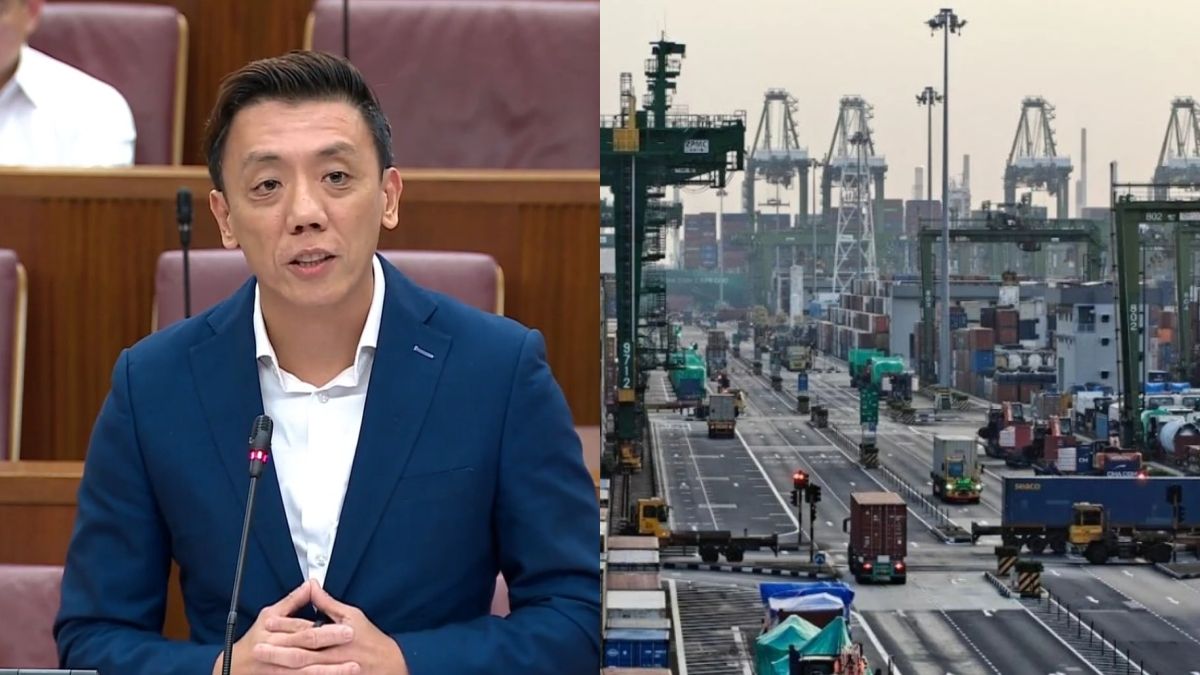
- Singapore will invest S$800 million over five years in transport research under the RIE2030 programme.
- Research will focus on autonomous technologies, AI and digital twins across aviation, maritime and land transport.
- The Government says technology will enhance productivity, support workers and strengthen Singapore's position as a global transport hub.

Singapore will invest S$800 million in transport research and innovation over the next five years, more than doubling its previous investment, as it seeks to strengthen its position as a leading global transport and connectivity hub through artificial intelligence, autonomous systems and digital twin technologies.
The funding, announced under the National Research Foundation's Research, Innovation and Enterprise (RIE) 2030 programme, will support research led by the Ministry of Transport (MOT).
Around two-thirds of the funding will be channelled towards autonomy and digital twins for connectivity, while the remainder will support sector-specific research in aviation, maritime and land transport.
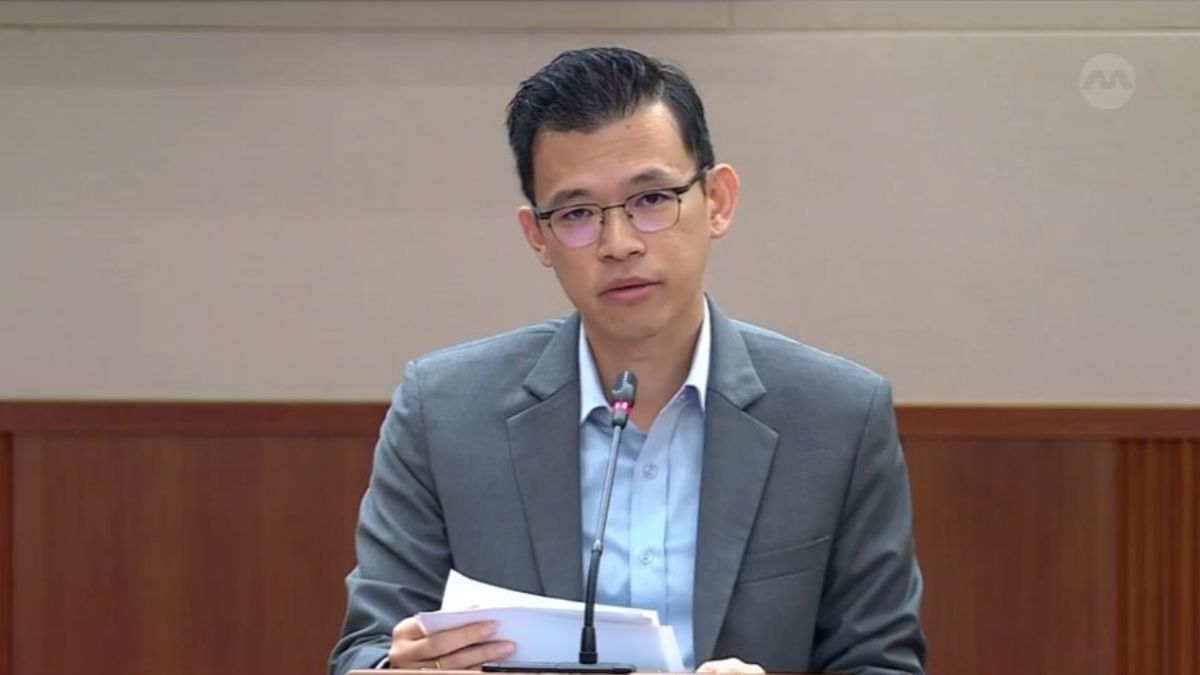
Acting Minister for Transport Jeffrey Siow announced the investment on 7 July 2026 during a parliamentary debate on Singapore's transport strategy.
The motion was tabled by the Transport Government Parliamentary Committee and led by its chairperson, Tin Pei Ling, Member of Parliament for PAP-Marine Parade-Braddell Heights GRC.
Strengthening Singapore's long-term competitiveness
In introducing the motion, Tin said Singapore must continue strengthening its long-term transport strategy to remain globally competitive amid changing international trade and transport patterns.
Speaking during the debate, Siow said the transport sector contributes around one-tenth of Singapore's gross domestic product and accounts for approximately 7 per cent of total employment.
"Transport is the foundation on which our economy is built," he said.
Siow said he had earlier outlined three strategic directions for the sector during the Ministry of Transport's Budget debate — ensuring Singapore remains globally oriented, future-focused and people-centric.
"These remain the north star," he said, adding that the Government's transport strategy would continue to be guided by those priorities.
He also stressed that Singapore must increasingly be recognised as a global thought leader in transport rather than relying solely on its physical infrastructure.
"Supply chains are becoming more fragmented and more distributed," Siow said. "If Singapore is merely a place through which flows happen to pass, then one day these flows will simply pass us by."
Instead, he said future competitiveness would depend on technology-driven connectivity, allowing Singapore to become "more efficient, more connected and more reliable than the alternatives".
Focus on autonomy and digital twins
Approximately two-thirds of the S$800 million investment will support research into autonomous technologies and digital twins.
Potential projects include a fully automated MRT depot, AI-enabled air traffic management systems and smart port networks powered by digital twin technology.
A digital twin is a virtual representation of a physical system or location that integrates real-time operational data, allowing planners to simulate different scenarios before implementing changes.
According to Siow, digital twins will improve planning, operational efficiency and resilience across Singapore's transport ecosystem.
The digital twins initiative will integrate transport data across land, sea and air networks while applying AI-enabled simulations to improve passenger and cargo movement.
Applications include more accurate weather forecasting to minimise airport disruptions and intelligent land traffic management systems to improve traffic flow.
Technology to complement, not replace, workers
Siow emphasised that technological advances are intended to complement workers rather than replace them.
He said AI could assist air traffic controllers by consolidating information from multiple sources, allowing controllers to focus on higher-value decision-making.
Automation can also reduce physically demanding and repetitive tasks performed by SATS workers.
"Technology of this kind raises the value of the workers," Siow said.
He similarly rejected concerns that autonomous vehicles would replace professional drivers.
Singapore currently has more than 70,000 taxi and private-hire drivers, compared with only about 20 autonomous vehicles operating mainly along fixed routes in Punggol.
Globally, there are approximately 7,000 autonomous vehicles in operation. Even if every one of those vehicles were deployed in Singapore, they would still represent less than 10 per cent of the country's taxi and private-hire vehicle population, Siow said.
Research across aviation, maritime and land transport
Minister of State for Transport Baey Yam Keng said the funding would support research into new operating models involving autonomous vehicles, autonomous vessels and robotics throughout Singapore's ports, airports and logistics network.
He said greater adoption of these technologies would allow higher transport volumes to be managed more efficiently while enabling workers to concentrate on tasks requiring human judgement and specialised expertise.
The autonomy workstream will focus on safer, larger-scale and less labour-intensive transport operations by combining autonomous platforms with AI and robotics.
Research areas include next-generation testing and certification frameworks for autonomous vehicles and unmanned aviation systems, autonomous maritime operations, and robotic cargo transloading using embodied AI.
"With our high volumes of cargo and supportive regulatory environment, Singapore can serve as a real-world 'living lab' to test and deploy these solutions at scale. Once proven here, they can be adopted internationally," Baey said.
AI to improve transport operations
Within aviation, research will focus on AI applications that optimise flight movements across airports, reduce flight times and carbon emissions, and minimise weather-related disruptions while easing the workload of air traffic controllers.
AI and automation will also improve the efficiency and safety of airside operations and assist workers with physically demanding duties such as baggage handling.
For the maritime sector, research will centre on autonomous port operations and integrated intelligent port services as Singapore prepares to accommodate increasing vessel traffic despite constraints on sea space and manpower.
Investment will support AI-powered port efficiency analytics, predictive vessel traffic management and smarter coordination of port services to reduce vessel turnaround times and improve operational synchronisation.
The funding will also support maritime decarbonisation through technologies capable of detecting and predicting the spread of fuel or chemical leaks, supporting the safe deployment of alternative fuels.
In land transport, research will focus on next-generation autonomous mass transit systems, automated rail depots and technologies designed to improve rail reliability.
Projects will also examine simplified rail technologies that reduce maintenance requirements, alongside AI-enabled predictive maintenance systems using sensors in highly automated rail depots.
Building on previous research programmes
The RIE2030 initiative builds on the earlier RIE2025 programme, which funded separate research programmes covering aviation, maritime and urban mobility.
Under the new programme, funding opportunities will be open to institutes of higher learning and research institutes. Companies will be able to participate through collaborative partnerships with those institutions.
Further details on the application process will be announced progressively throughout the RIE2030 programme.
Baey said the investment would ultimately enable Singapore to "do more with less".
"We will make better use of our manpower in a tighter labour environment, while using less space and emitting less carbon, so that Singapore remains strong as a global transport and connectivity hub," he said.