Coffee shop fires steady at 15 to 19 cases a year, says Shanmugam
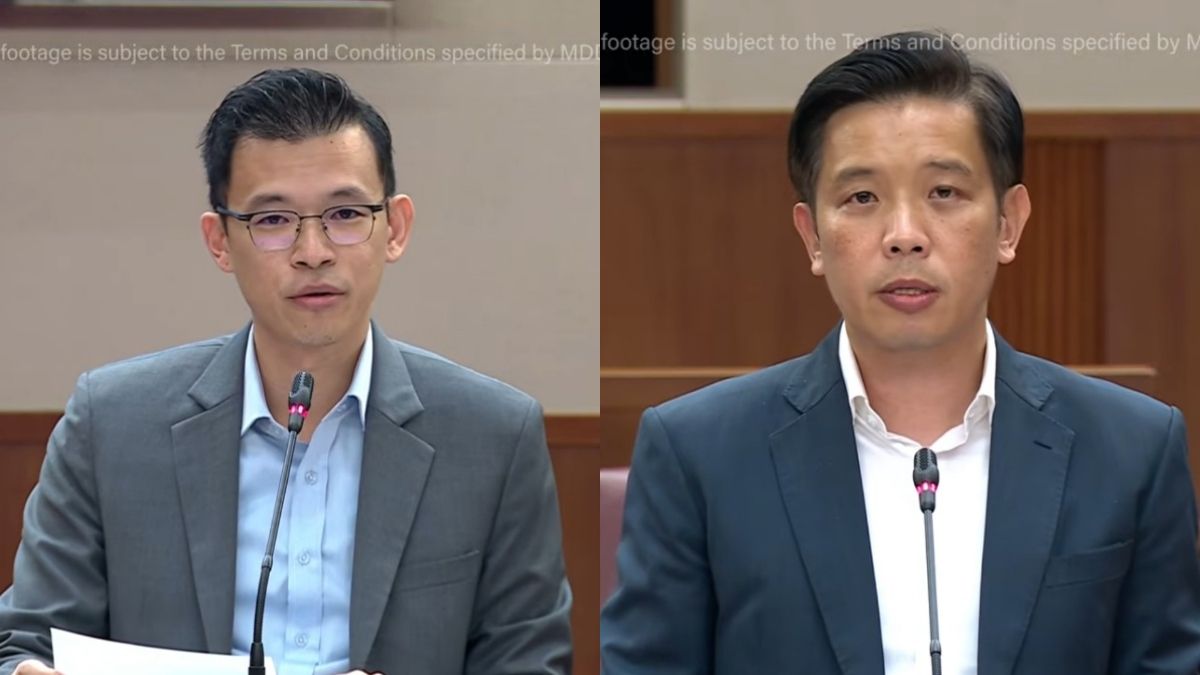
Coordinating Minister for National Security and Minister for Home Affairs K Shanmugam and Minister for Sustainability and the Environment Grace Fu Hai Yien addressed fire safety at HDB coffee shops in written replies to Parliament.
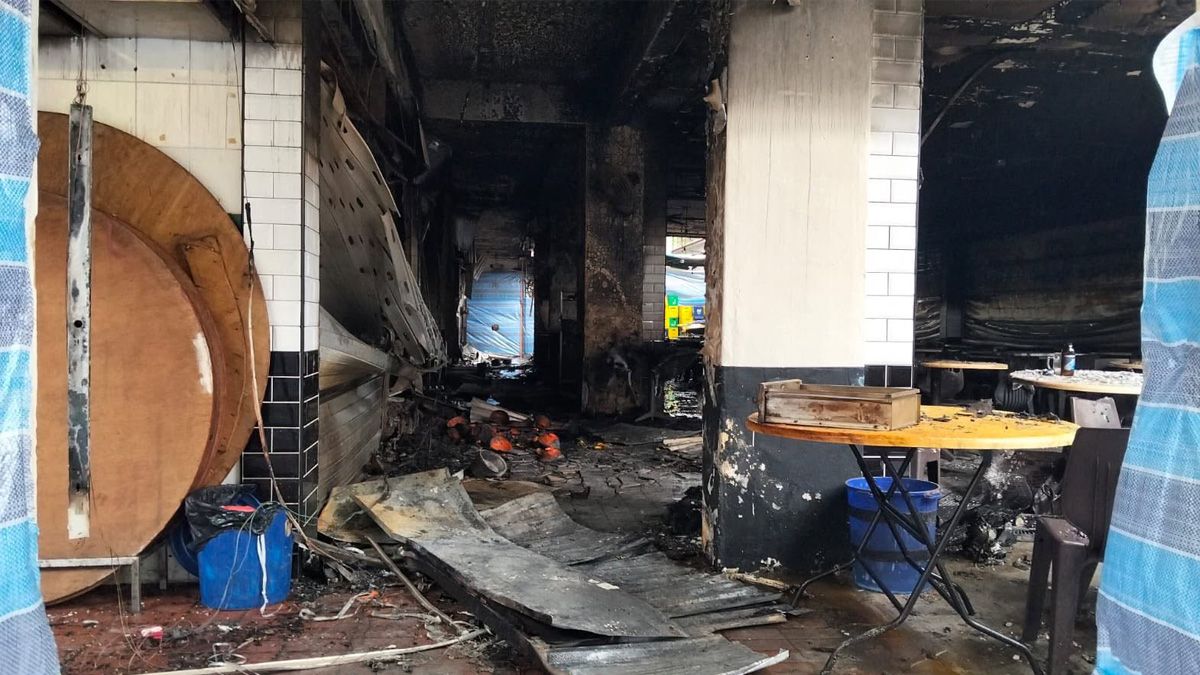

Fires at coffee shops within HDB blocks have numbered between 15 and 19 cases annually from 2021 to 2025, accounting for under one per cent of total fire incidents each year, Parliament was told in a written reply on 7 July 2026.
The figures were disclosed in response to a question from Aljunied GRC MP Sylvia Lim on whether such fires represented a growing area of concern.
K Shanmugam, Coordinating Minister for National Security and Minister for Home Affairs, said food and beverage establishments, including coffee shops, are "subject to a comprehensive suite of requirements to minimise fire risk" under the Fire Code. These cover measures to reduce risks from cooking activities as well as provisions to safeguard occupants should a fire break out.
The Minister detailed a layered system of oversight. The Singapore Civil Defence Force (SCDF) conducts enforcement checks on food and beverage establishments through both scheduled visits and unannounced inspections triggered by public feedback.
These checks run alongside annual fire safety inspections carried out by the Housing & Development Board (HDB), as well as separate regulations imposed under HDB's licensing conditions for coffee shop operators.
Shanmugam maintained that "these fire safety measures and enforcement checks remain adequate," pointing to the largely unchanged incident count over the past five years.
He added that SCDF would continue to monitor fire trends involving HDB coffee shops and work with agencies including HDB and the National Environment Agency (NEA) to take further intervention measures "if required." He closed by urging stall operators to uphold good fire safety practices, stating it remained important "to remain vigilant and mitigate fire risks as best we can."
Turning to the question of training requirements, Lim also asked the Minister for Sustainability and the Environment whether cooked food stallholders should be required to undergo basic fire safety training before being licensed. Fu did not provide a direct commitment to mandatory pre-licensing training, instead outlining existing outreach efforts.
Fu said the National Environment Agency partners with SCDF and the National Fire and Emergency Preparedness Council to "regularly engage and educate stall operators in hawker centres, including cooked food stallholders, on how to prevent and respond to fire emergencies."
The reply did not specify whether such engagement was compulsory or how frequently individual stallholders were reached, and the Minister did not provide the requested assessment on introducing mandatory training as a licensing condition.
The exchanges follow a series of coffee shop fires this year that drew public attention to the risks faced by such establishments. A fire broke out at a coffee shop in a kitchen exhaust duct at Block 269B Queen Street on the morning of March 19, sending one person to hospital for smoke inhalation and prompting the evacuation of 20 people. SCDF extinguished the blaze with two water jets and later urged stallholders to keep stoves, surrounding areas and exhaust duct openings free from grease and oil stains.
A more serious fire struck a coffee shop at Block 106 Hougang Avenue 1 in the early hours of May 5, with several stalls ablaze and about 40 people evacuated before SCDF's arrival. Five people were taken to hospital for smoke inhalation, and the facades of 12 HDB flats across three levels above the coffee shop were charred.
The blaze also disrupted power supply to a grocery store, a hair salon, a clinic, a hardware store and nearby ATMs. Lim, together with Aljunied-Hougang Town Council vice-chairman Dennis Tan, visited affected households, while the town council worked to restore power and assess damage to common property.
The broader fire statistics released by SCDF in February provide additional context for the parliamentary exchanges. Total fires in Singapore rose three per cent to 2,050 in 2025, up from 1,990 in 2024, with more than half involving residential buildings. Unattended cooking and electrical faults, including overloaded sockets and wiring issues, remained the top two causes of home fires.
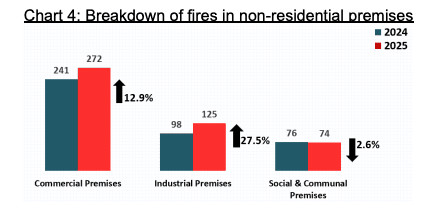
Non-residential premises also saw a rise in fire calls, up 13.5 per cent to 471 in 2025. Commercial premises fires increased 12.9 per cent, from 241 to 272 cases, while industrial premises fires rose 27.5 per cent, from 98 to 125.
Fires at social and communal premises fell 2.6 per cent, from 76 to 74. Electrical origins accounted for 43.5 per cent of non-residential fires in 2025, and SCDF said it would continue working with the National Fire and Emergency Preparedness Council, building owners and fire safety managers on outreach programmes and enforcement checks.