WP's Kenneth Tiong calls for deeper regional integration; Government backs additive growth model
Singapore should pursue deeper economic integration with Malaysia and Southeast Asia through shared industries and joint ownership, Workers' Party MP Kenneth Tiong said, while the Government agreed on closer regional ties but stressed integration must create new value for Singapore rather than shift jobs abroad.
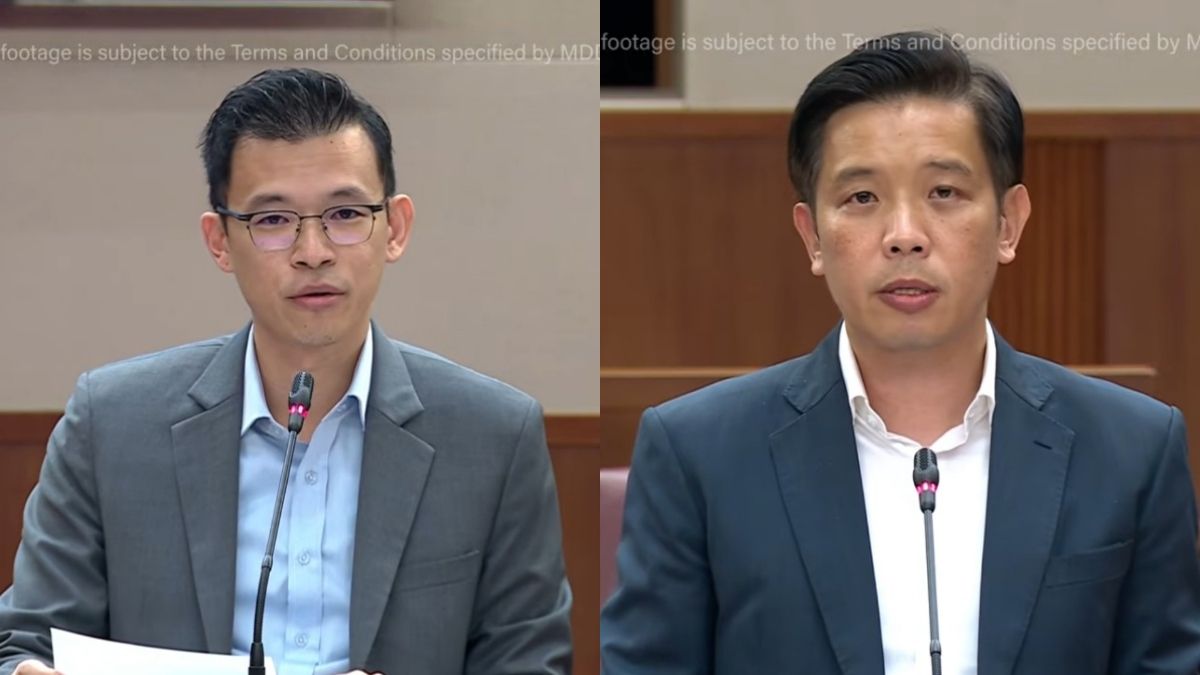
- Kenneth Tiong proposed deeper Singapore-Malaysia economic integration through joint ownership, semiconductor collaboration and stronger regional value chains.
- Alvin Tan said the Government supports regional integration but stressed it must create additional value for Singapore rather than relocate jobs or investments.
- Both agreed the Johor-Singapore Special Economic Zone is central to future cooperation, though they differed on how ambitious its integration should become.

Workers' Party MP Kenneth Tiong has called for Singapore to pursue much deeper economic integration with Malaysia and Southeast Asia, arguing that the Republic must move beyond acting as a regional hub and instead become a long-term stakeholder in the region's future growth.
Speaking during an adjournment motion titled Integration with the region on 7 July, Tiong said Southeast Asia's demographic advantage presents a limited opportunity that Singapore should seize through joint industrial policy, shared ownership of strategic industries and stronger bilateral institutions.
He warned that Singapore's traditional growth model is reaching its limits amid rising geopolitical tensions and rapid economic development among its neighbours.
Southeast Asia's demographic window is closing
Tiong noted that Southeast Asia is home to around 680 million people and has a US$4 trillion economy, with populations significantly younger than Singapore's.
Malaysia and Indonesia have median ages of about 31, Vietnam 34 and the Philippines 27, compared with Singapore's nearly 44.
However, he cautioned that demographic strength alone does not guarantee prosperity.
"Youth is a window, not a promise," he said.
While a youthful workforce creates opportunities for growth, Tiong noted that since 1990 fewer than one in three middle-income economies worldwide have successfully become high-income economies.
He estimated Southeast Asia has only another 15 to 20 years to fully capitalise on its demographic dividend before ageing populations reduce that advantage.
Singapore's hub model faces new limits
Singapore successfully became a high-income economy by attracting foreign investment to manufacture goods and services for global markets, Tiong said.
However, he argued that this strategy is becoming more vulnerable as major powers increasingly use access to their markets as geopolitical leverage.
ASEAN countries still conduct only around 21 per cent of their trade with one another, compared with roughly 60 per cent within the European Union, while about three-quarters of Singapore's exports remain dependent on external demand.
"A region that produces mainly for markets it does not control can be squeezed at will," he said.
He also challenged the long-held assumption that Singapore's institutional and technological advantages over neighbouring economies will remain permanent.
Pointing to Malaysia's growing semiconductor capabilities, including Penang's advanced chip design industry and Vietnam's industrial upgrading, Tiong said Singapore can no longer assume it will remain the region's indispensable hub indefinitely.
"A hub, unlike an owner, can be bypassed," he warned.
Instead, Singapore should help build a larger Southeast Asian middle class while ensuring Singaporean companies own meaningful stakes across regional value chains.
Making the Johor-Singapore SEZ a genuine joint project
Tiong argued that the Johor-Singapore Special Economic Zone (JS-SEZ) offers an opportunity to create a new model of bilateral economic integration, but said greater clarity is needed before businesses can fully participate.
He proposed publishing a consolidated boundary map of the zone, clearly explaining what additional benefits companies receive within the SEZ beyond Malaysia's nationwide investment incentives, and establishing a single set of rules and entry procedures across both countries.
Currently, companies must deal with multiple agencies on the Malaysian side, including the Iskandar Regional Development Authority, Invest Johor, the Malaysian Investment Development Authority and the Invest Malaysia Facilitation Centre, alongside Singapore's Economic Development Board.
Tiong said businesses need "one SOP to enter the zone and one rule book" so they can invest with confidence.
He also suggested Singapore's Economic Development Board and the Ministry of Trade and Industry should be assessed using joint performance indicators measuring the overall success of the SEZ, rather than only Singapore-originated investments.
"What gets measured gets managed," he said.
Building a shared semiconductor ecosystem
Tiong argued that semiconductors represent the strongest opportunity for genuine joint industrial policy between Singapore and Malaysia.
He noted that Singapore hosts major international semiconductor manufacturing and advanced packaging operations, while Malaysia is investing heavily in indigenous chip design through its National Semiconductor Strategy, backed by RM25 billion and a target of training 60,000 engineers.
Rather than competing directly, he said the two countries possess complementary strengths.
Among his proposals were creating an integrated "design-to-fab-to-packaging" ecosystem spanning both countries, allowing investment funds to lease manufacturing capacity from Singapore-based wafer fabrication plants to support regional chip designers, and expanding prototype production capabilities while new fabrication facilities are being built.
He also proposed joint university programmes involving the National University of Singapore and Nanyang Technological University establishing an embedded institute within Selangor's semiconductor cluster.
Graduates would receive joint qualifications and have employment opportunities across Johor, Selangor and Singapore.
To further deepen integration, Tiong suggested creating a legally recognised Malaysia-Singapore business entity, with ownership shared between both countries, that would receive preferential access to grants, financing and procurement.
He also called for reviving the Malaysia-Singapore Business Development Fund to provide competitive seed funding for new bilateral ventures.
Preparing businesses for the RTS era
Turning to the Rapid Transit System (RTS) Link, due to begin operations in 2027, Tiong said many Singapore retailers are already anxious about increased consumer spending flowing into Johor.
He cited estimates that between S$1.5 billion and S$2.1 billion in annual retail spending could shift across the border, particularly affecting food businesses and personal services.
Although he supported current government initiatives to improve neighbourhood retail and provide grants, Tiong said they would not fundamentally address the challenge.
Instead, he proposed Singapore investing directly in transit-oriented developments planned around Johor's future rail network and negotiating reserved retail spaces for Singaporean small businesses within those developments.
He also suggested giving eligible Singapore retailers tradable priority rights to occupy these commercial spaces or financial assistance to support relocation.
Drawing parallels with the joint development of Marina One following the 2010 railway land agreement between Singapore and Malaysia, Tiong argued that co-ownership could again provide a mutually beneficial solution.
A call to become stakeholders, not just intermediaries
Tiong said the proposals would require both countries to accept greater uncertainty and share more control, but argued the strategic benefits outweigh the risks.
He warned that Singapore's future cooperation with Malaysia should not remain focused primarily on attracting foreign direct investment.
Instead, it should help build a larger Southeast Asian middle class, deepen regional value chains and create a "stakeholder economy" in which Singapore shares ownership of the region's long-term success.
"This is the model of integration I believe we should seek with the region," he said, "one that best maximises the 15 to 20 years Southeast Asia has before it ages out of its demographic dividend."
Integration must be "additive, not substitutive"
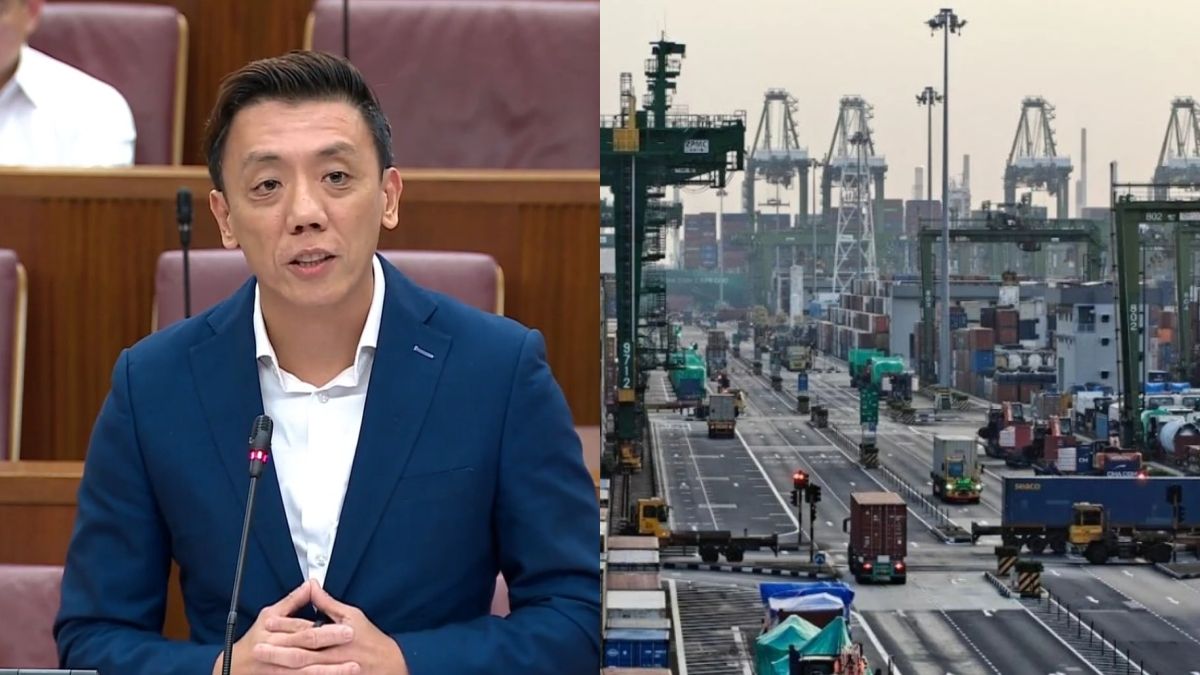
Responding to the motion, Minister of State for Trade and Industry Alvin Tan said Singapore's approach to regional integration is aimed at creating new economic value rather than shifting jobs and investments out of the country.
"The key question of this motion is how do we ensure deeper integration with the region... is additive and not substitutive," he said.
He added that the objective was to ensure integration "does not simply move activity from Singapore to somewhere else, but also creates value in Singapore and our partners which would otherwise not be captured."
Tan said Singapore has always maintained an open economy and must continue strengthening its capabilities as global investment competition intensifies and supply chains are reshaped.
He cited the JS-SEZ, the Batam, Bintan and Karimun (BBK) region, and the Vietnam-Singapore Industrial Parks as examples of how Singapore works with neighbouring economies to enlarge the economic space available to businesses and workers.
On the JS-SEZ specifically, Tan said the initiative covers about 3,500 sq km and combines Singapore's strengths in connectivity, finance, technology, professional services and headquarters functions with Johor's land, production capacity and other complementary advantages.
"The whole point about the JS-SEZ is about creating value together that neither side would have created or captured alone," he said.
Addressing concerns over governance, Tan said both countries have established dedicated offices to facilitate investments, while a refreshed Johor-Singapore Special Economic Zone ministerial committee will provide strategic oversight. He also noted that the zone's boundaries are already publicly available.
Singapore will remain the region's high-value hub
Tan acknowledged concerns that deeper integration could encourage businesses to relocate activities to Johor, but said Singapore's strategy has always been to retain higher-value functions while allowing firms to scale across both sides of the Causeway.
Instead, companies should retain headquarters, financing, research and development, branding, intellectual property and talent development functions in Singapore while using Johor's complementary strengths for production and expansion.
He pointed to food manufacturer Old Chang Kee, which operates production facilities in Johor while maintaining its Singapore operations, and South Korea's SPC Group, which houses its Southeast Asia headquarters, innovation centre and training facilities in Singapore alongside manufacturing in Johor.
On semiconductors, Tan said Singapore's strategy is to reinforce its role as a key global node rather than replicate capabilities being developed in Johor or Penang.
Using STMicroelectronics as an example, he said wafer fabrication in Singapore is complemented by assembly and testing operations in Johor, enabling products to reach markets more quickly.
Singapore and Malaysia have jointly targeted attracting 50 investment projects over five years and 100 projects over a decade under the JS-SEZ, he added. Since the memorandum of understanding was signed in January 2024, Singapore and Singapore-based companies have committed more than S$5.5 billion in investments into Johor.
RTS Link requires businesses to adapt, not retreat
Turning to the Rapid Transit System (RTS) Link, which Tan chairs a task force for, he said the Government has been consulting residents, merchants, landlords and business groups on how Singapore can benefit from improved cross-border connectivity.
Measures under study include rejuvenating heartland centres, helping businesses transform and improving commercial collaboration across both sides of the Causeway, with recommendations expected later this year.
"The way to respond to greater connectivity is not to retreat from competition... but to help our businesses to compete more effectively," Tan said.
He concluded that regional integration should be judged not by whether every activity remains in Singapore, but whether the Republic continues to anchor headquarters, innovation, financing and other high-value functions while creating better jobs for Singaporeans.
"If our region as a whole becomes more attractive to global investors and Singapore captures the higher-value parts of that value chain, that's also additive integration," he said.