SEN officers in mainstream schools nearly double to 820 since 2017
Minister for Education Desmond Lee told Parliament that SEN Officers in mainstream schools rose from around 450 in 2017 to around 820 by December 2025, as separate data showed 99 per cent of national exam access arrangement applications were approved.
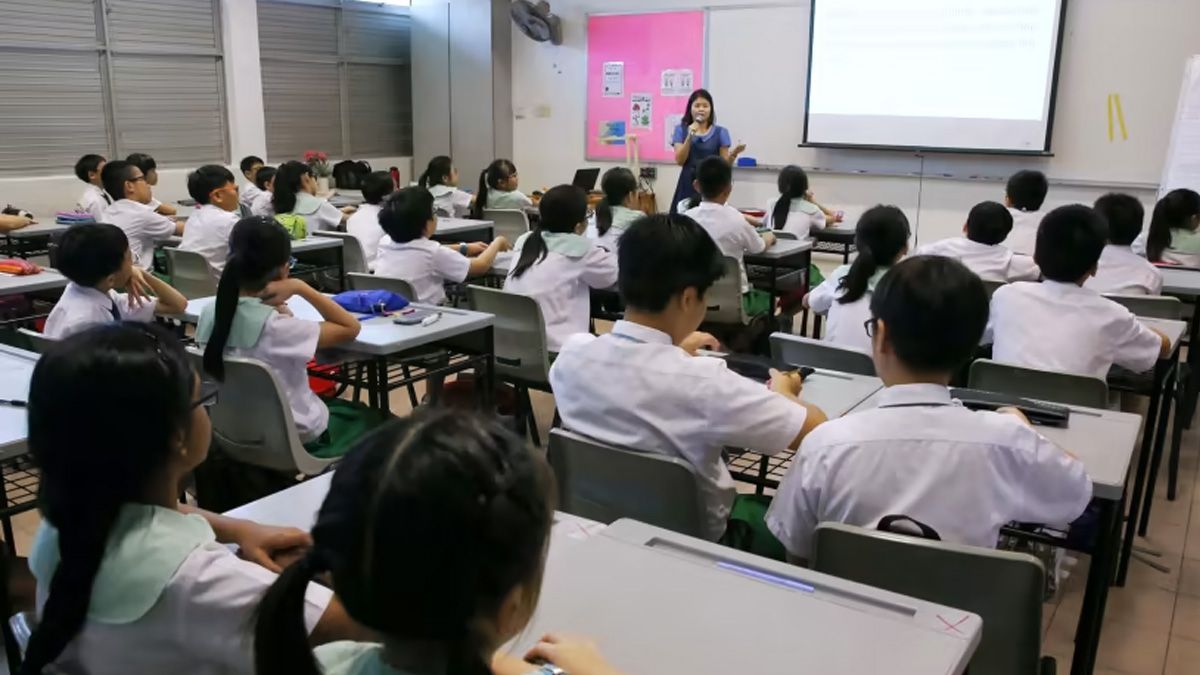

Around 820 SEN Officers were deployed in mainstream schools as at December 2025, up from about 450 in 2017, Minister for Education Desmond Lee disclosed in a written reply to Parliament on 7 July 2026.
The near-doubling was revealed in response to a question on the numbers of students with special educational needs (SEN) and SEN Officers over the past five years.
The question was put to the Minister by Workers' Party MP Louis Chua Kheng Wee, Sengkang GRC, who had asked for the median and average numbers of SEN students and SEN Officers in primary and secondary schools for each of the past five years.
Chua also filed a related written question seeking data on requests for, and approval rates of, examination and non-examination access arrangements made by SEN students in mainstream schools.
Addressing the first question, the Minister noted that the proportion of students with SEN in mainstream schools "has remained stable, at around 7% of the overall student population", and that this stability held across both primary and secondary levels.
He added that beyond raw numbers, the Ministry also considers "the complexity of cases and the range of needs of students with SEN" when planning support.
The Minister did not provide the requested median and average figures broken down by year and by primary or secondary level.
Instead, he pointed to the growth in SEN Officer numbers as the more relevant indicator of support capacity, and noted that all teachers in mainstream schools are trained in basic support strategies, with every school also having Teachers Trained in Special Needs to share best practices and strengthen teacher capability.
Turning to access arrangements, the Minister said that for national examinations, the Singapore Examinations and Assessment Board approves such arrangements "to help students with physical or learning disabilities demonstrate their knowledge and skills without compromising assessment objectives".
Over the past five years, between 6,000 and 7,000 applications were submitted annually for the PSLE and the GCE 'N', 'O' and 'A' level examinations, of which 99 per cent were approved.
The Minister explained that all access arrangement applications for national examinations are submitted through schools and require supporting documents such as medical documents from qualified professionals.
When evaluating these applications, he said the primary considerations are "the student's diagnosed conditions, and the school's understanding of how the student typically learns and functions in the classroom."
The Minister did not provide the requested breakdown of applications and approval rates for school-based assessments, as the Ministry does not track this data.
Schools instead decide on such applications based on their own understanding of students' educational needs and the nature of the assessment involved.
On accommodations outside assessment settings, such as the use of assistive devices in learning or the modification of Co-Curricular Activity arrangements, the Minister said these are determined at the school level and are not classified as access arrangements.
The Minister did not provide tracking data for these accommodations, as MOE does not maintain such records, leaving the extent of school-level support in this area undocumented at the national level.