MOE to extend school bus fuel support beyond April, fare hikes from July
The Ministry of Education will extend temporary fuel cost support for school bus operators beyond April, with fare increases permitted from July, Education Minister Desmond Lee told Parliament.
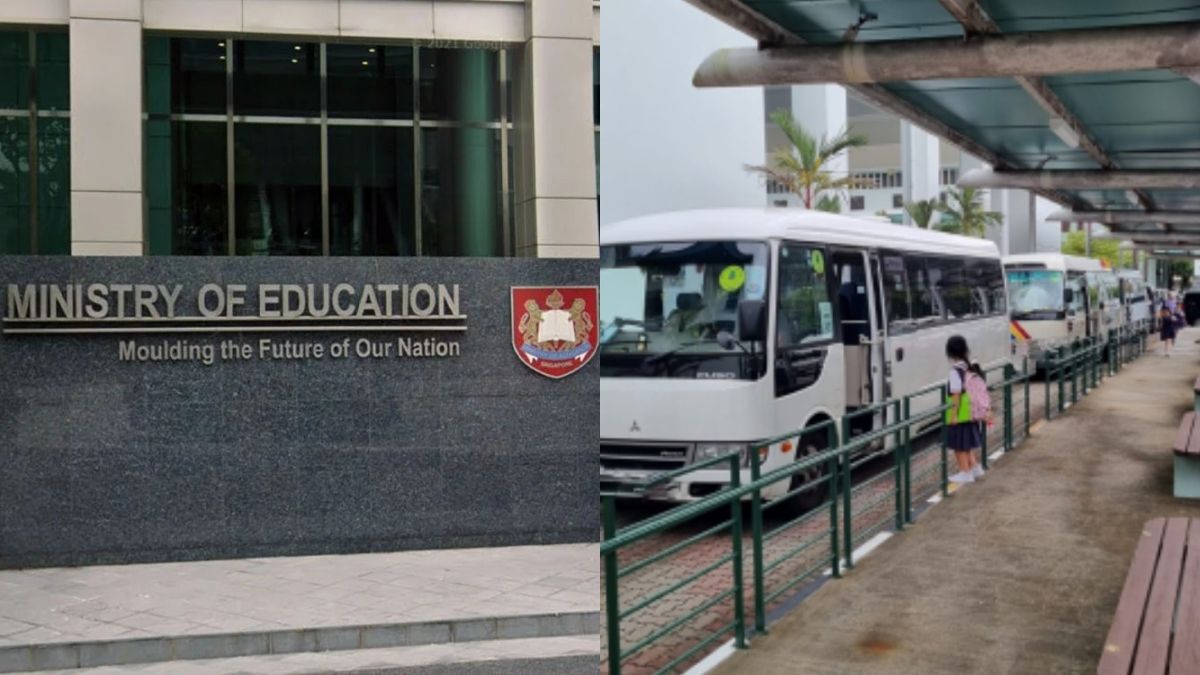

Temporary government support for school bus operators serving primary and Special Education schools will be extended into May and June, Education Minister Desmond Lee confirmed in Parliament on 5 May 2026, as fuel costs tied to the ongoing Middle East conflict remain elevated.
The disclosure came in response to oral questions filed by People's Action Party MP Joan Pereira and Workers' Party MP Abdul Muhaimin Abdul Malik.
Pereira had sought clarity on additional measures being considered to assist stakeholders, schools, and students in ensuring the availability of regular school bus services, and whether the Ministry of Education would consider assuming direct management of bus operations with existing companies serving as contractors.
Abdul Muhaimin's questions focused specifically on ad hoc transport services, asking whether MOE had assessed the risk of private operators withdrawing from schools due to unviable profit margins, and what contingency measures existed for ad hoc school activity transport.
In a written reply read into the Parliamentary record, Lee said MOE had provided support equivalent to 13 per cent of school bus fare revenues in April. "Given that fuel prices remain elevated, we intend to provide additional support for May and June," the Minister stated.
From July, operators of regular bus services will be permitted to raise fares to reflect cost increases, with Lee framing the adjustment as necessary to ensure services remain viable over the longer term.
The 13 per cent temporary support applies to operators of regular bus services for primary and SPED schools but does not extend to ad hoc service providers — the gap that Abdul Muhaimin's question had specifically identified.
On this front, Lee said MOE had advised schools to work directly with operators on reasonable rate adjustments. As of 28 April 2026, schools had facilitated temporary rate increases across 42 bus contracts, with more under consideration.
The Minister also encouraged other procurers of transport services to adopt a similar approach, "so that the burden is shared fairly."
The Minister did not provide a direct assessment of the risk of private bus operators ceasing to serve schools due to unviable profit margins, the specific concern Abdul Muhaimin had raised regarding ad hoc services.
Instead, Lee outlined the facilitation measures in place and indicated that MOE would continue working closely with schools and operators to ensure the sustainability of both regular and ad hoc services.
Turning to Pereira's question on whether the Government would consider taking over school bus operations, Lee was unequivocal. "MOE does not plan to take over school bus operations," he said.
Under the current model, schools select operators through a competitive bidding process, which Lee said allows schools to exercise direct oversight over service quality and affordability while giving operators the flexibility to customise their offerings.
Where continuity is at risk, MOE said it would step in to facilitate replacement arrangements or novate existing contracts.
The Middle East conflict has placed prolonged pressure on global fuel markets, raising operating costs for transport operators across sectors. For school bus operators — whose fare structures are typically fixed under multi-year contracts — the inability to immediately pass through cost increases has created particular financial strain.