Arakan Army killed hundreds of Rohingya at Hoyyar Siri, survivors still denied return, HRW says
A Human Rights Watch report released on 18 May 2026 documents the May 2024 massacre of Rohingya Muslims at Hoyyar Siri in Myanmar's Rakhine State, in which Arakan Army fighters killed and wounded hundreds of unarmed civilians and burned down their village. Survivors remain effectively detained two years on.
- Human Rights Watch documented an Arakan Army massacre of hundreds of Rohingya civilians at Hoyyar Siri in May 2024.
- Survivors remain effectively detained two years on, denied return and subjected to forced labour.
- HRW is calling on the Arakan Army and Myanmar's military junta to cooperate with independent investigations.

Two years after Arakan Army fighters killed and wounded hundreds of Rohingya Muslims and burned their village in Myanmar's Rakhine State, survivors of the massacre remain unable to return home, Human Rights Watch (HRW) said in a report released on 18 May 2026.
The 56-page report, titled "'Skeletons and Skulls Scattered Everywhere': Arakan Army Massacre of Rohingya Muslims in Hoyyar Siri, Myanmar," documents an attack on 2 May 2024 in Hoyyar Siri, also known as Htan Shauk Khan in Burmese, in Buthidaung township.
The Arakan Army, an ethnic armed group operating in Rakhine State, has denied responsibility for war crimes. HRW found that its fighters deliberately fired on unarmed villagers who were attempting to reach safety after the armed group advanced on two nearby Myanmar military bases.
Details of the massacre only began to emerge more than a year after the attack, once some survivors managed to flee to Bangladesh and Malaysia.
Witnesses describe deliberate targeting of civilians
HRW interviewed several dozen witnesses and survivors, corroborating their accounts through satellite imagery and verified photographs and videos. The findings directly contradict claims made by the Arakan Army in a letter to HRW, which asserted that its fighters only targeted military personnel or members of Rohingya armed groups.
According to witness testimony, Arakan Army fighters opened fire on a group of civilians leaving Hoyyar Siri, some of whom were waving white flags as a sign of surrender.
"First, my son was hit by a bullet," one man recounted to HRW. "Then my wife and baby daughter were shot, followed by my other daughter." Fighters continued firing as the villagers turned back and attempted to flee.
A second witness described being herded with a group of villagers into a paddy field beside a mosque. "Within minutes they opened fire at us randomly, without saying anything," she told HRW. "No one was spared. My husband was hit by a bullet. When the Arakan Army saw he was still alive, they came closer, firing at him several more times."
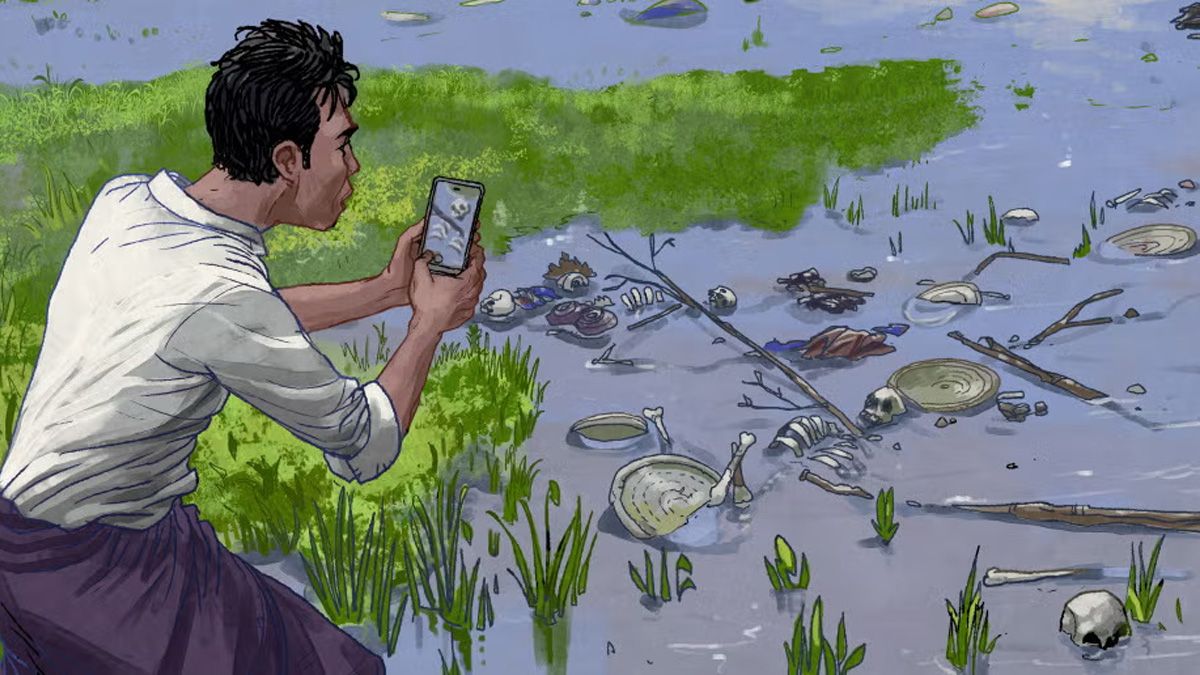
HRW compiled a list of over 170 villagers, including approximately 90 children, who were killed or remain missing following the attack. Researchers noted that the actual death toll is likely considerably higher.
Satellite imagery and verified photographs show human remains at three separate sites within the village. Civilian clothing is visible among the remains at two of those sites. The imagery further corroborates witness accounts that Arakan Army fighters set fire to Hoyyar Siri and subsequently destroyed the entire village.
Robbery, torture, and abductions reported
Beyond the killings, witnesses reported a range of additional abuses. Fighters are said to have robbed villagers of cash and jewellery. One man who was detained by the Arakan Army told HRW that he and other detainees were beaten and tortured, including with electric shocks.
Several witnesses also reported that fighters abducted Rohingya women and girls from the village.
Survivors effectively detained in makeshift camp
In February 2025, the Arakan Army ordered all surviving residents of Hoyyar Siri to relocate to a makeshift camp nearby. Villagers who subsequently managed to flee to Bangladesh and spoke to HRW said they were denied freedom of movement, subjected to forced labour, and faced severe shortages of food and medical care.
They also described an incident in August in which the armed group organised a controlled media visit to Hoyyar Siri, during which survivors said they were compelled to provide false testimony exonerating the Arakan Army for the civilian killings.
"The Arakan Army's murder of hundreds of Rohingya civilians and the burning of their village in Rakhine State in 2024 took the armed conflict with Myanmar's junta to a new level of depravity," said Meenakshi Ganguly, deputy Asia director at HRW.
"Today, the massacre's survivors are effectively detained by the Arakan Army, which has neither provided redress nor held those responsible to account," Ganguly added.
Broader context of violence against Rohingya
The massacre at Hoyyar Siri took place against a backdrop of renewed hostilities in Rakhine State. Armed conflict between Myanmar junta forces and the Arakan Army resumed in November 2023, with both sides accused by HRW of serious abuses, including targeted attacks on civilians, arson, and unlawful conscription.
Over the past decade, the Myanmar military has committed what HRW and international bodies have characterised as ethnic cleansing, genocidal acts, and other atrocities in Rakhine State, forcing more than one million Rohingya to flee.
HRW said the Hoyyar Siri massacre underscores that a return to Rakhine State remains unsafe for Rohingya refugees, including in areas now under Arakan Army control.
Calls for accountability and independent access
HRW called on both the Myanmar military and the Arakan Army to immediately halt attacks on civilians, release all unlawfully detained civilians, and provide redress to victims and their families.
The Arakan Army, in its letter to HRW, stated that it would facilitate inquiries by international human rights groups it deemed credible and independent.
HRW called on both parties to cooperate fully with independent investigations, including by granting access to the Independent Investigative Mechanism for Myanmar (IIMM), the United Nations (UN) special rapporteur on Myanmar, and international human rights organisations.
"Myanmar's military seemed indifferent to the plight of the Rohingya civilians at Hoyyar Siri in 2024, and since then the junta has done nothing to address their broader human rights concerns," Ganguly said.
"Concerned governments should urgently press both the Myanmar junta and the Arakan Army to respect the rights of all communities in Rakhine State," she added.